What Grandma's Garden Knows That You Don't
8 de junio de 2026 · 6 min de lectura
Summer has a way of landing kids in places they don't normally spend time. School routines fall away, and suddenly there's a week, maybe two, at a grandparent's house. The pace is different there. Slower. There are smells you only catch once a year, and drawers full of things you can't quite explain, and a person who is genuinely, unhurriedly happy to see you.
Those visits are full of material. Not the kind you have to go looking for, but the kind that simply sits there in plain sight, waiting for someone to notice it. A book built from a single summer visit can hold more warmth than you'd expect, because it draws from a place and a person your child already loves.
The Garden as a Character
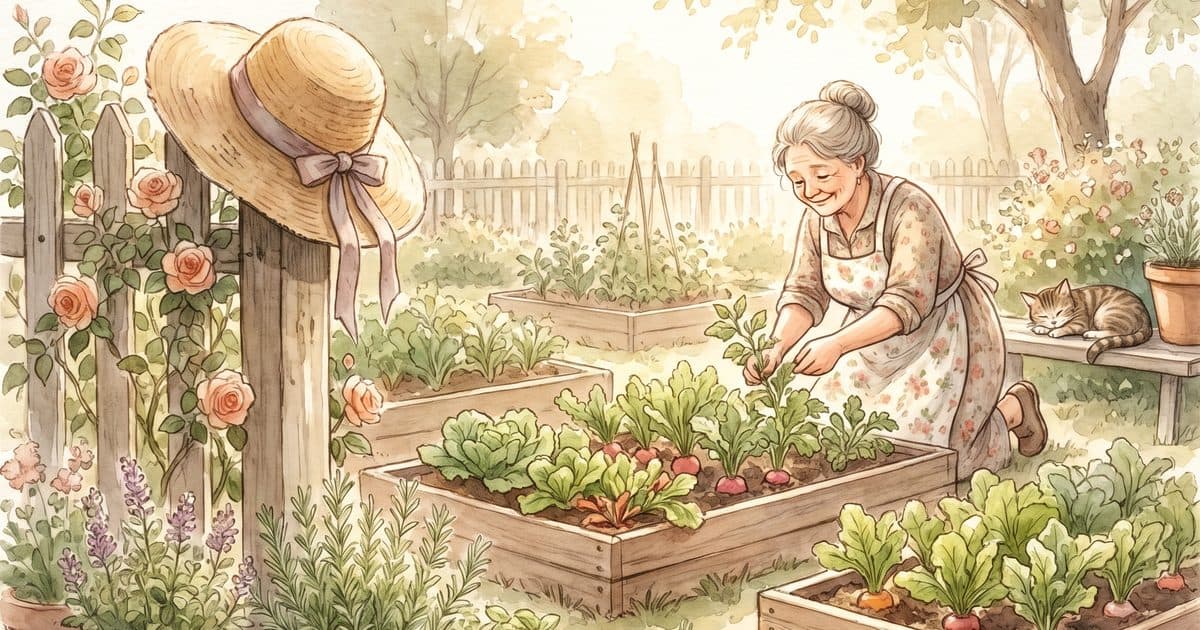
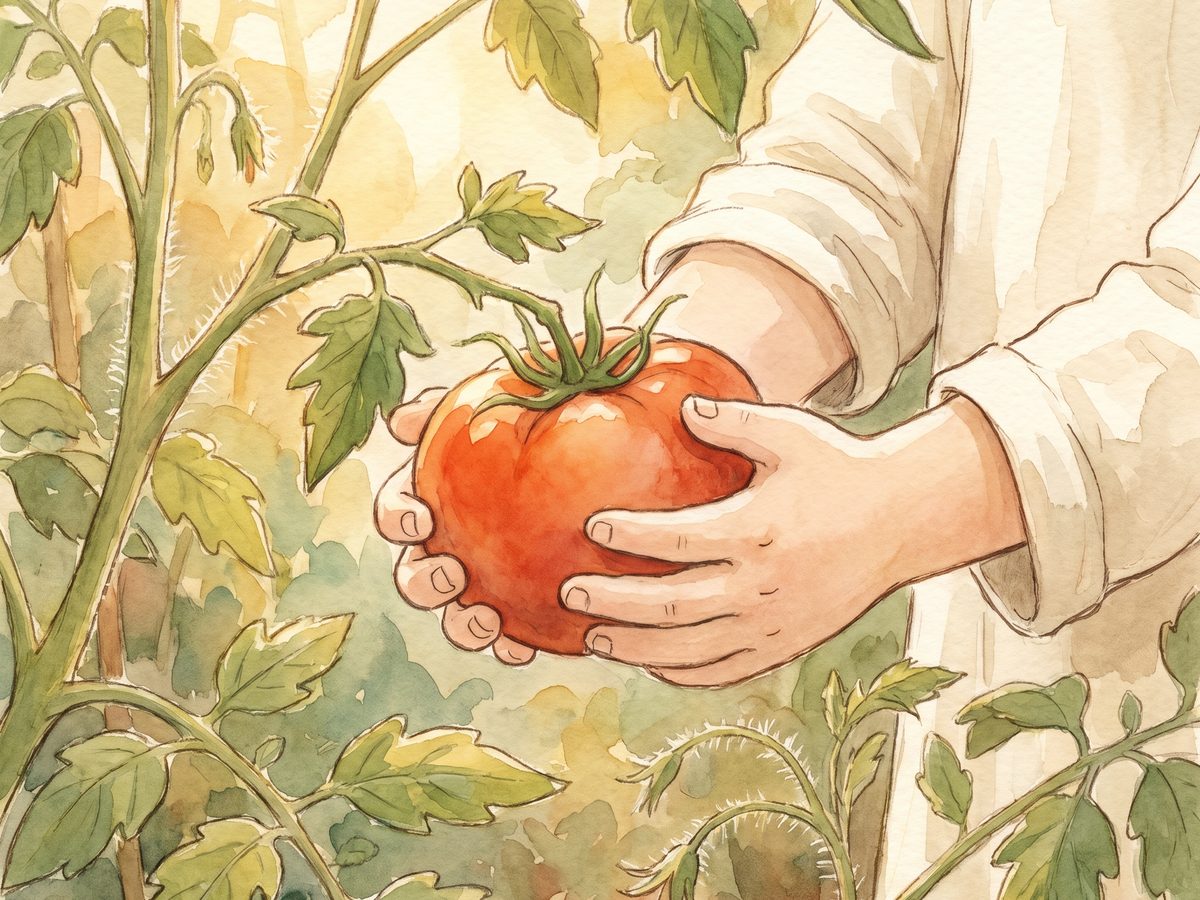
A lot of grandparents garden. Some do it seriously, with labeled rows and compost bins and strong opinions about watering schedules. Others keep just a few pots on the back step, a tomato plant, some herbs, a rose that's been there since before anyone remembers. Either way, a garden is one of the richest small worlds a child can walk into.
Think about what a child actually experiences in that space. The dirt under fingernails. The moment of lifting a leaf to find something growing underneath. The specific way a grandparent bends down to show what's ready and what isn't. These are sensory, physical, real moments, and they're exactly the kind of thing that makes a story feel true rather than invented.
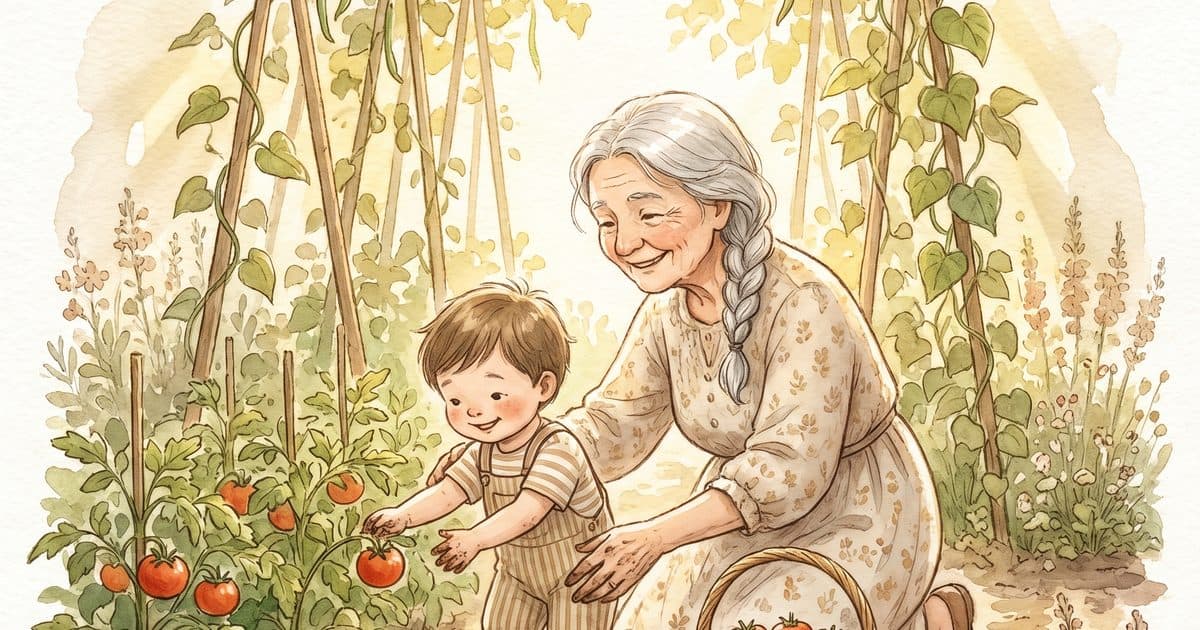
A book that follows a child through their grandparent's garden, naming the plants, marveling at the snails, carrying a basket, harvesting something small and proud, gives that experience a shape your child can return to. Long after the summer is over, the book holds the garden still.
Recipes Are Stories in Disguise
Most grandparents have at least one dish that belongs to them. Not a recipe from a book, but something they learned from someone else who learned it from someone else. A pie with a particular crimp on the crust. A soup that only tastes right in their kitchen. Pancakes made in a sequence that doesn't quite make sense until you've watched it happen.
What makes these moments so good for a story is that they're inherently full of action and detail. There's a sequence to follow, a mess to make, a result to taste. A child who cooks something with their grandparent is doing something, not just watching, and stories built around doing tend to be ones kids ask to hear again.
You don't need a grand occasion. A Tuesday morning where someone teaches your child to crack an egg properly is enough. The small, instructional, slightly chaotic moments of cooking together are exactly the kind of thing that slips away without being captured, and exactly the kind of thing that's lovely to keep.
The Stories Told on the Couch
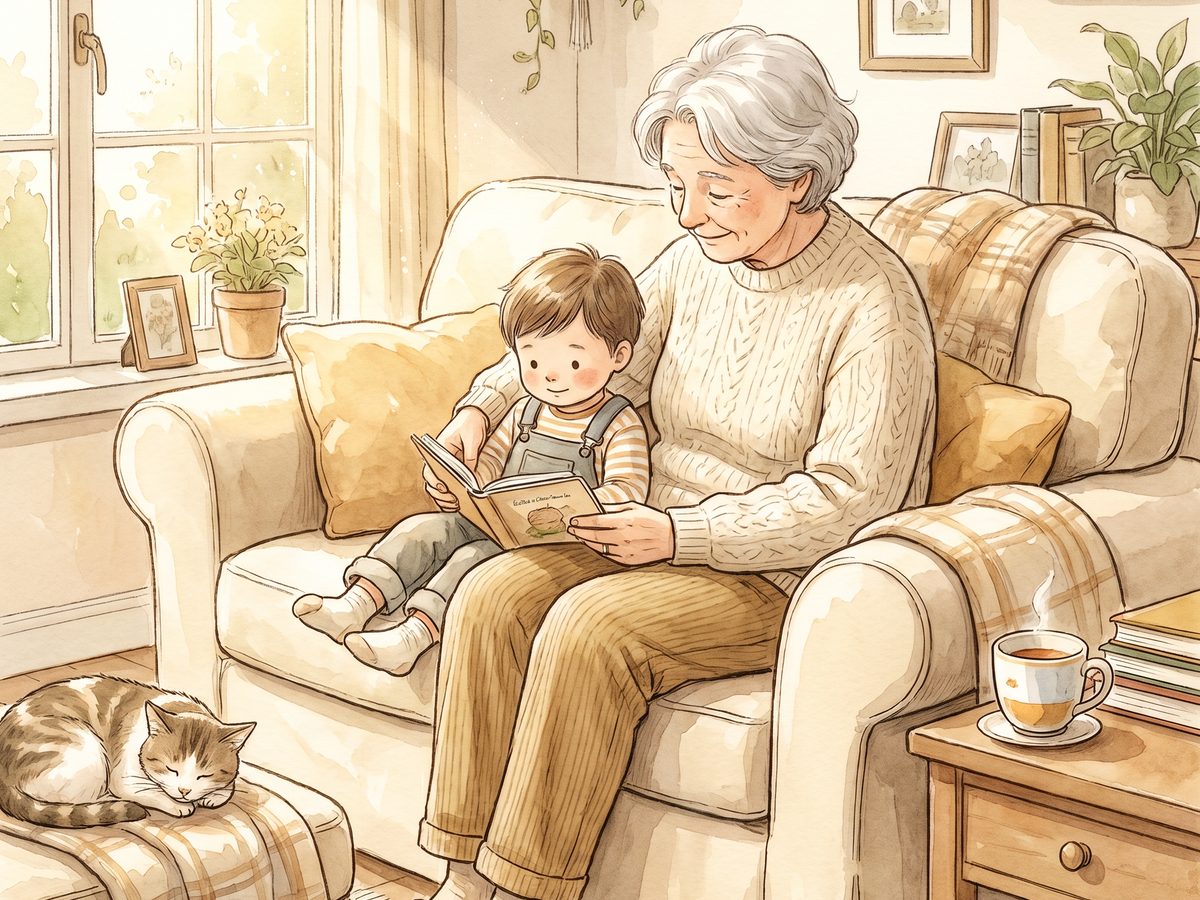
The stories a grandparent tells on an ordinary afternoon are often the ones no one else in the world can tell.
Grandparents carry information that exists nowhere else. They remember what a neighborhood looked like before a building went up. They know what your child's parent was like at the same age. They have opinions about things that happened before your child was born, told from the inside, not from a book. And often, they'll share these things casually, almost as an aside, while the TV is on low and the afternoon is winding down.
A personalized book can weave these stories in gently. Not as a history lesson, but as something a grandparent character shares with the child character, the way it actually happens. A sentence or two dropped into a scene. "Your grandpa once told you about the time he drove all night to get home for his mother's birthday." That kind of detail makes a character feel full and real, and it passes something on without making a big ceremony of it.
When you sit down to build your characters, it helps to jot down a few of these small stories before you start. You don't need many. Even one or two specific details, a habit, a phrase, a memory, can give a grandparent character on the page the texture of the real person.
What to Gather Before the Visit Ends
You don't need to be taking notes the whole time. But before you leave, or while you're still there and the details are fresh, it's worth pausing for a few minutes to write things down. The goal isn't completeness. It's capturing the handful of specifics that made this visit feel like itself.
- One thing your child and the grandparent did together that felt ordinary but satisfying
- A food they made, shared, or talked about
- Something in the house, garden, or neighborhood your child noticed or asked about
- A story the grandparent told, even just the gist of it
- A phrase, nickname, or habit that belongs only to this person
- A moment where your child taught the grandparent something, too
That last one is easy to overlook. Grandchildren teach their grandparents things all the time, a new word, a game, a different way of looking at something familiar. When that goes into a story, it makes the relationship feel mutual and warm rather than one-directional. Both people are the main character.
A Book That Travels Both Ways
One of the quiet pleasures of a book like this is that it works as a gift in more than one direction. Your child gets a story starring themselves and someone they love. But the grandparent gets something too: the knowledge that the visit mattered enough to keep. That their garden and their recipes and their couch-side stories were worth writing down.
If you're already thinking about this as a gift, the grandparents gift guide has some good starting points for how other families have approached it. Some order a copy for the child and a second for the grandparent. Some make it a surprise for both. There's no single right way, and the how it works page walks you through what the process actually looks like from start to finished book.
A summer visit has a shape. It arrives, it fills up with small moments, and then it ends. A book made from one of those visits doesn't stop the ending, but it does give the whole thing somewhere to live. That's not a small thing.
You Already Have What You Need
It can feel like a story needs something dramatic at its center. A trip, an event, a milestone. But the visits that tend to make the best books are often the ones where nothing particularly remarkable happened. A few days in a familiar place with a person who loves your child completely. That's the whole story. It's enough.
If you'd like to see what a finished book looks like before you commit to anything, you can take a look at a sample story to get a feel for the illustrations and the way a narrative comes together. And if you're curious about what's possible in terms of personalizing the details, the features page covers what you can include when you build your characters and scenes.
The garden is still growing. The recipes are still being made. The stories are still being told on the couch. There's a book in that, and this summer is as good a time as any to make it.
Haz tu propio libro
Empieza con un momento y las personas que hay en él. Nosotros escribimos e ilustramos el resto.
Crear un libro