What Grandma's Garden Knows (And How to Keep It)
June 8, 2026 · 6 min read
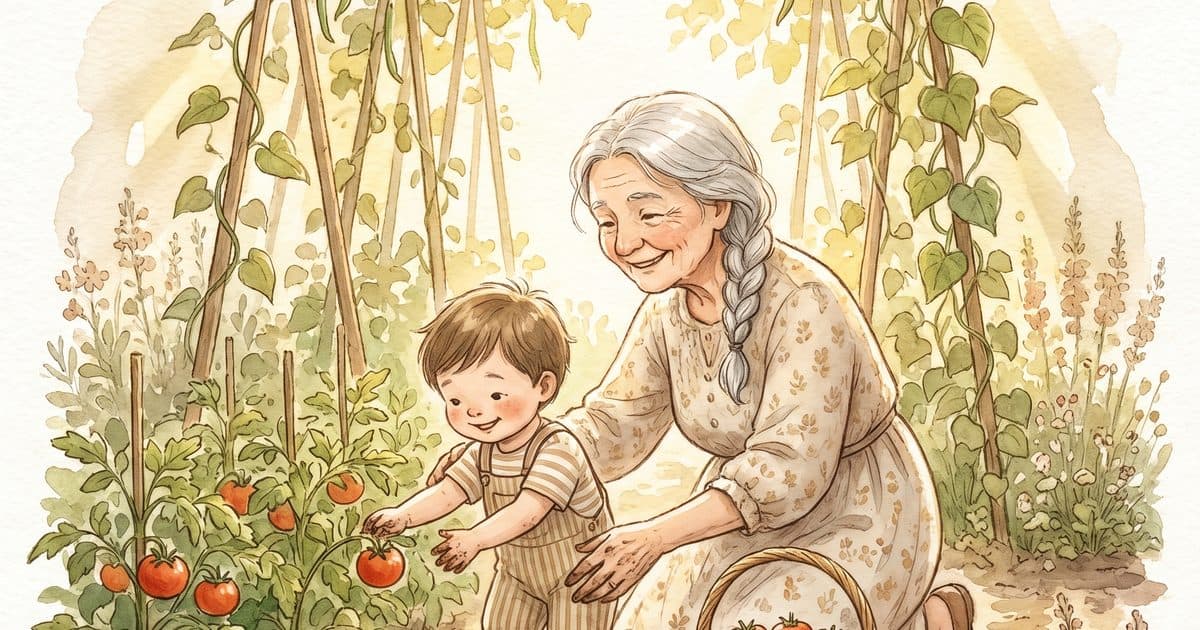
There's a certain kind of knowledge that lives only in one place. It lives in the way your mother's mother pinches dead blooms without looking, in the particular drawer where the good scissors are always kept, in the name she uses for the herb at the back of the garden that no one else in the family has ever bothered to look up. That knowledge doesn't announce itself. It just sits there, warm and available, every time a child is paying attention.
Summer is often when children get closest to it. A week at Grandpa's, a long weekend that stretches into ten days, a daily bicycle ride to a house three streets over. The pace is slower, the routines are different, and there's more room than usual for a child to simply watch an older person go about their life. That watching is where everything interesting happens.
The Visit Is Already a Story
Most families don't think of a summer visit as material. It feels too ordinary, too domestic. Grandma made her sauce. Grandpa showed you how the latch on the shed works. You watched old home videos on a laptop because the rain came in. None of it feels like the stuff of a book.
But ordinary and domestic is exactly what a children's book can hold best. A story doesn't need a plot twist. It needs a place that feels specific, a person who feels real, and small moments that build a world. A grandparent's home, experienced through a child's eyes during a summer visit, has all of that in abundance. The trick is just noticing before the visit ends and the details blur.
If you want to see what that kind of story can look like, it's worth spending a few minutes with a finished book before you start gathering your own details. It helps you realize how little you need to invent and how much you already have.
The Garden as a Character
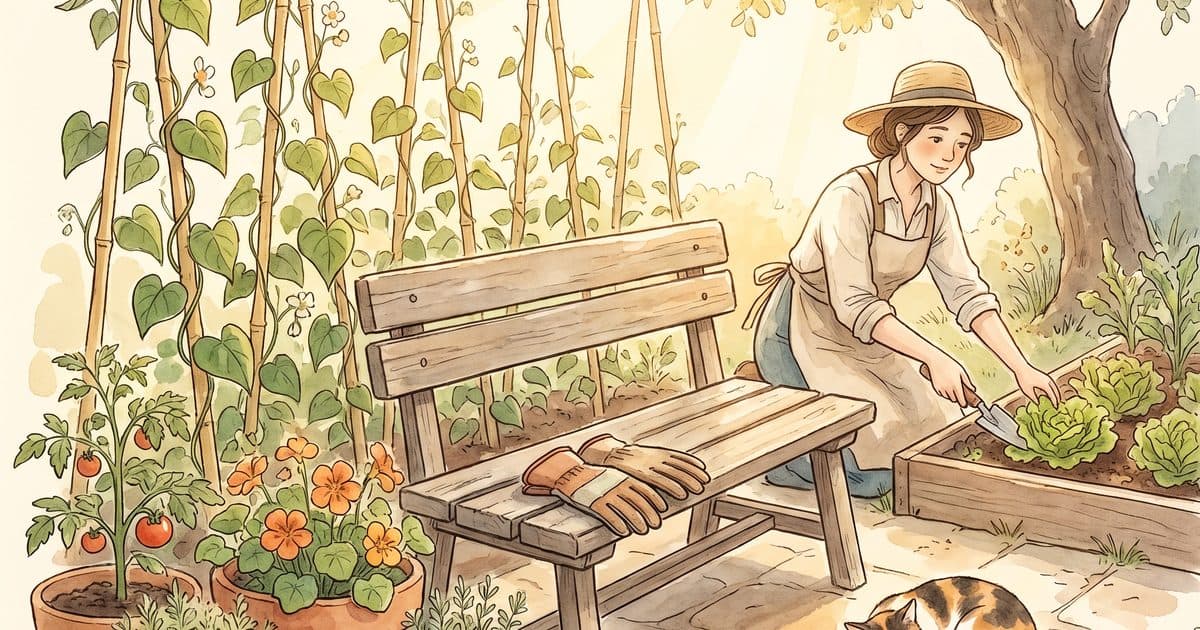
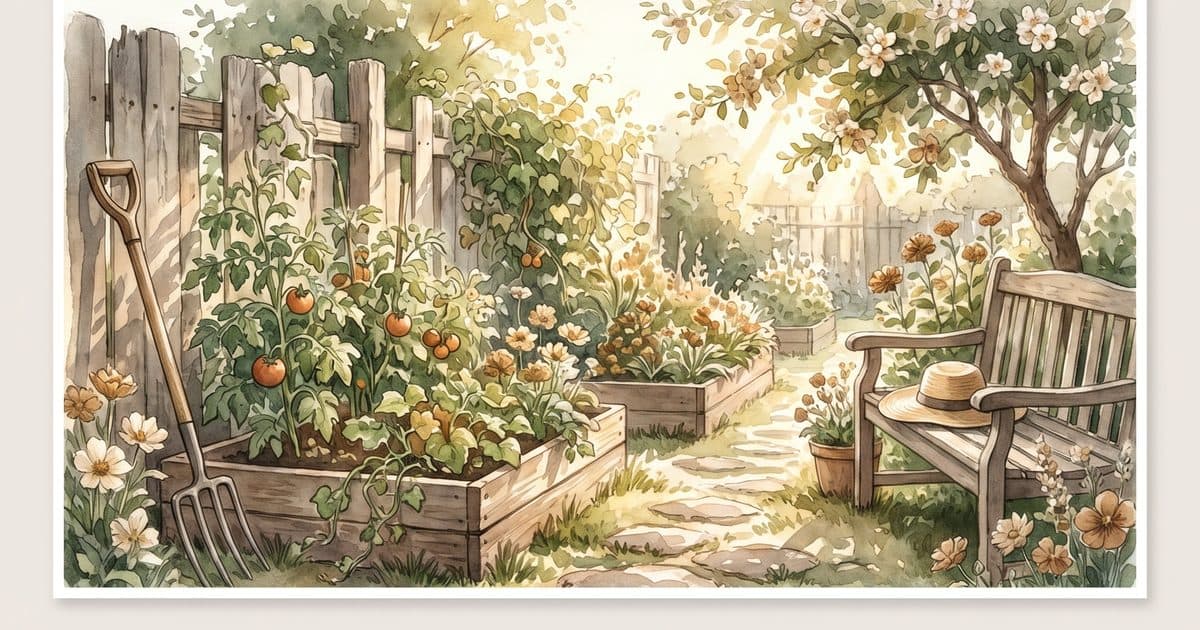
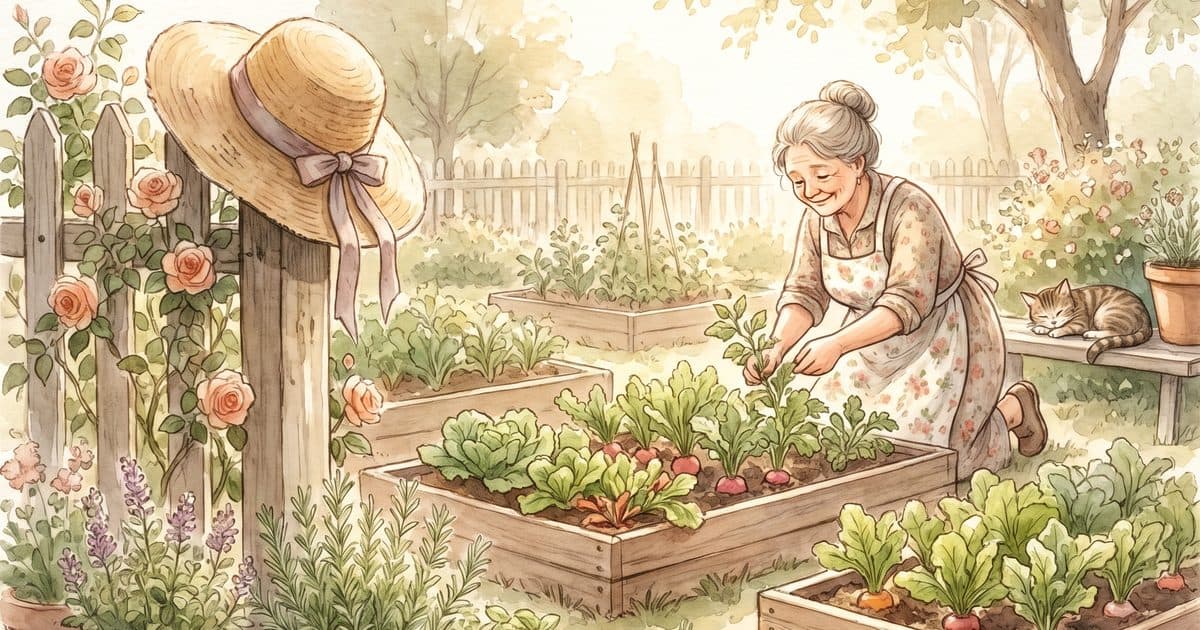
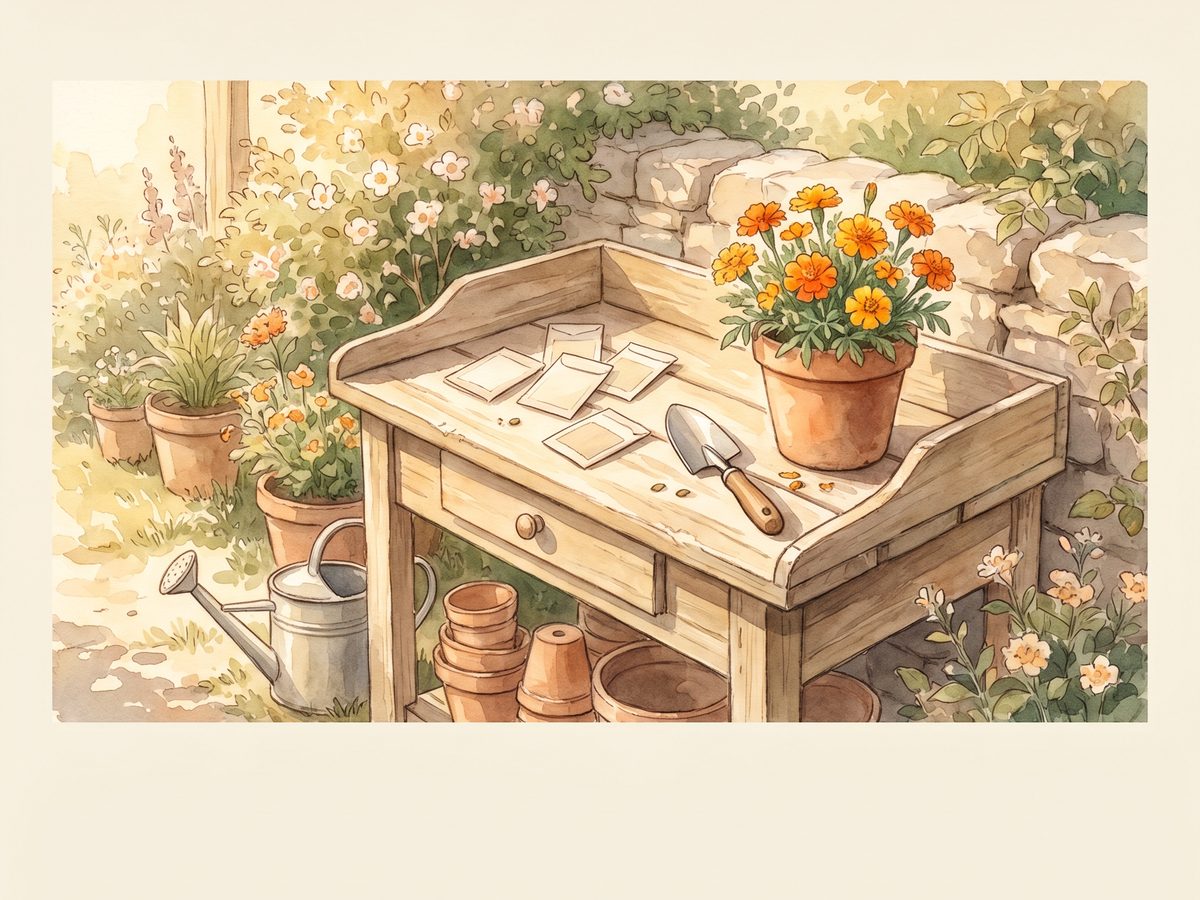
Gardens are remarkably good at holding a person's personality. The choice to grow zucchini instead of cucumbers, the clay pots lined up on the step, the bird feeder that's always full, the one rose that gets fussed over more than everything else combined. A child notices these things. They file them under 'what Grandma is like' even if they'd never say it that way.
When you think about building a book around a summer visit, the garden is often the richest place to start. What grows there? What does the grandparent call each plant? What does a child do in that garden, and what do they learn or notice? These aren't abstract questions. They're the kind of specific, sensory detail that makes a story feel like it belongs to one real family and no other.
Recipes, Rituals, and the Things Passed Hand to Hand
Food is another place where family knowledge lives in a very physical way. The way dough is supposed to feel before you stop kneading. The amount of salt that goes in without measuring. The pan that has to be used because the other ones aren't right. A grandparent in a kitchen is often teaching without meaning to, and a child standing on a step stool beside them is learning without knowing it.
These moments sit naturally inside a personalized book. A scene in the kitchen, a named dish, a small description of how something is made together. It doesn't need to be a recipe. It just needs to be true. The goal is that a child, years from now, opens the book and smells the kitchen without being able to explain why.
The same is true of rituals that aren't about food at all: the morning walk, the card game that comes out after dinner, the particular chair where the stories get told. Any repeated, beloved habit between a grandparent and a grandchild is a scene waiting to exist on a page.
The best things to put in a book are the things everyone in the family already knows but has never quite said out loud.
What to Collect Before the Visit Ends
You don't need to interview anyone or take formal notes. But it does help to pay a certain kind of attention in the last day or two of a visit, when you know the ordinary moments are about to go back to being far away. Here are a few things worth holding onto before you go.
- The names the grandparent uses: for plants, for neighbors, for dishes, for the child themselves.
- One or two things the grandparent makes or fixes that feel like a small superpower to a kid.
- A room or outdoor spot that feels most like them, and one or two details that make it theirs.
- A story they told, even if you only remember the shape of it, not every word.
- What the child asked about that week, because children's questions point straight at what they found remarkable.
- A phrase they use that you'd miss if it were gone.
None of this needs to be exhaustive. When you start building your characters, you'll find that a handful of true details does far more than a long list of facts. The illustrators and storytellers who work on each book know how to take something real and make it feel like it always belonged on a page.
Why a Grandparent Book Is Different from Other Gifts
There's a particular kind of gift that a personalized grandparent book becomes over time. At first it's a children's book, read at bedtime, pointed at happily when a character looks right. But it also becomes something a grandparent keeps. It sits on a shelf or a bedside table in a house that doesn't usually have children's books, and it's a record of being known and celebrated by the people they love most.
That works in both directions. The child has a story that stars someone who matters to them. The grandparent has proof, in illustrated form, that they are a main character in their grandchild's world. That's not a small thing to give anyone, and it doesn't require a birthday or a holiday as an excuse.
If you're curious about how the whole process works before you commit to anything, the how-it-works page walks through every step clearly. Most families find it much simpler than they expected, and the questions that feel hard at the start, like what to include or how to describe a person, tend to answer themselves once you begin.
Before Summer Gets Away from You
Summer visits have a way of feeling permanent while they're happening and then, very quickly, feeling like they were over in a moment. The details that seem unforgettable in the middle of a warm afternoon can be surprisingly hard to reconstruct by the time autumn arrives. A book built from this visit, from this garden, from these particular people in this particular summer, is a way of making sure some of it stays.
Make a Book of Your Own
Start with one moment and the people in it. We write and illustrate the rest.
Start a Book