The Old House Comes With You
27 de julio de 2026 · 6 min de lectura
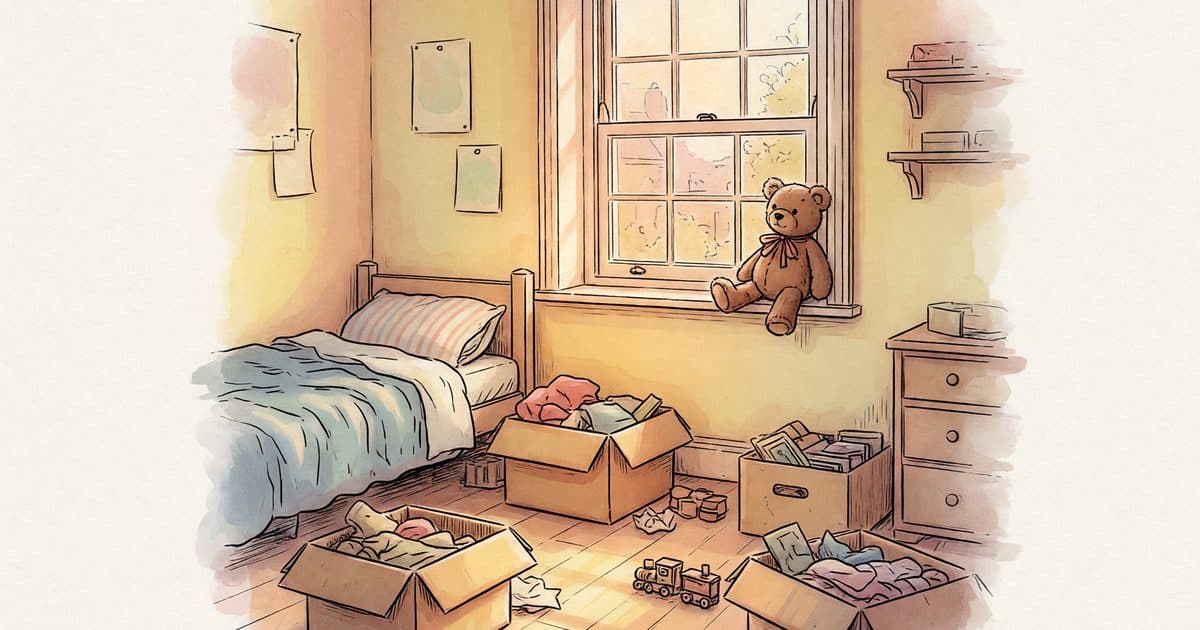
Moving in summer has a particular feeling. The days are long, the driveway is hot, and the boxes stack up faster than anyone expected. Somewhere in the middle of it all, there's a child watching their whole world get taped shut and carried out the door.
They don't always have the words for it. A move is exciting and sad at the same time, and those two feelings don't take turns. This is a post about helping a child hold both: the old place they're leaving and the new one that's waiting. One good way to do that is to turn the goodbye into a story worth keeping.
The house was never just a house
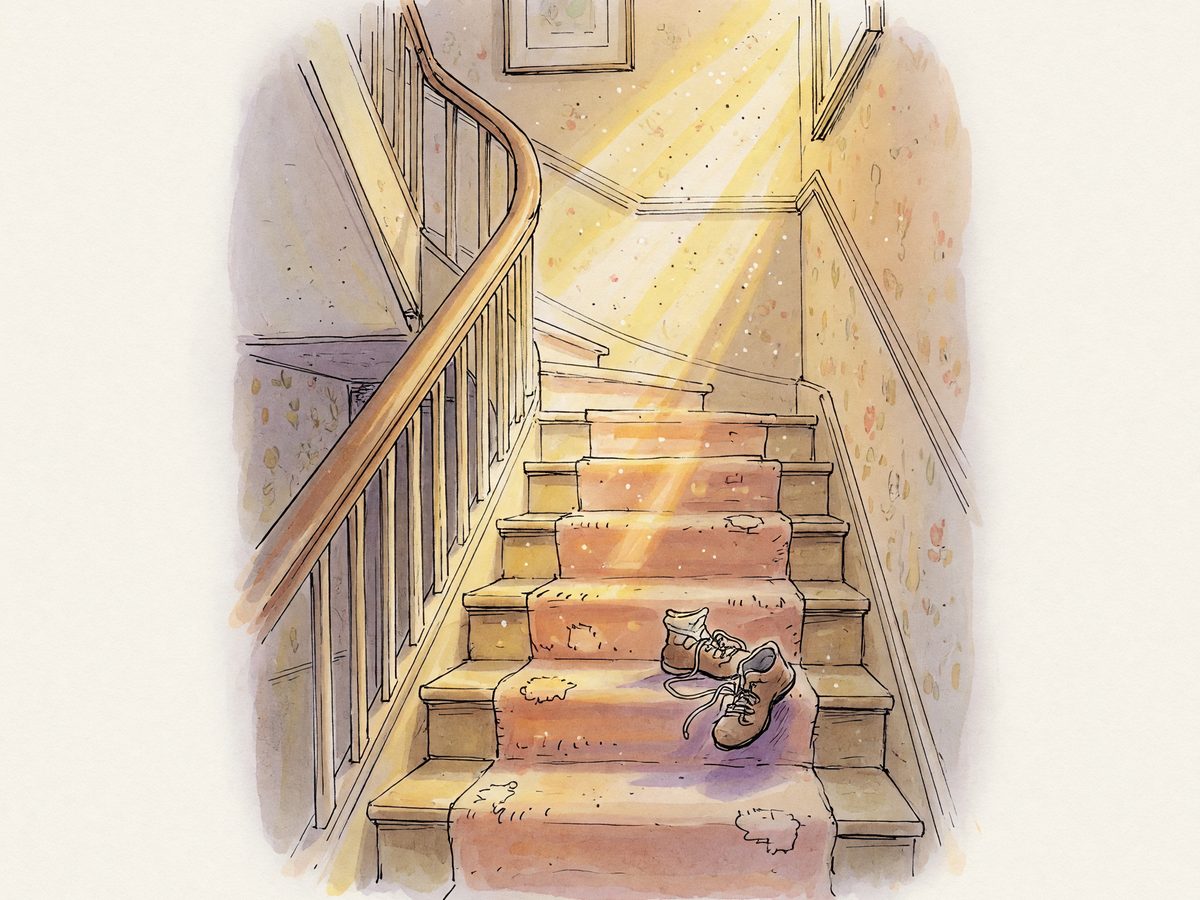
To a grown-up, a home is square footage and a mortgage and a commute. To a child, it's the exact spot on the stairs where the light lands in the morning. It's the squeaky third step. It's the corner of the yard where they buried a plastic dinosaur and never dug it back up.
When you start naming those things out loud, you'll be surprised how many there are. The kitchen cabinet with the dent. The neighbor's cat who visited the fence. The bath toy that lived on the edge of the tub. These are the details a child actually misses, and they're rarely the ones on the listing photos.
So before the rooms go empty, walk through them together. Let your child be the tour guide. Ask what they'll remember about each room, and write down the answers exactly as they say them. You're gathering the raw material of a keepsake, and the odd, specific answers are the best ones.
Turn the goodbye into a story
A move is a natural story shape. There's a place you know, a journey in between, and a place you don't know yet. That middle part is exactly where a child's worry lives, and a story is a gentle way to walk through it while they're safe in your lap.
This is where a personalized book can help. You can make one starring your own child, set in your actual old home, with the front door they know and the room they slept in. If you'd like to see how that comes together, you can start with the characters and build the cast from the people, and pets, who lived there with them.
If you'd rather not start from a blank page, you can tell us who the book is for and one moment worth keeping, and we'll write and illustrate it for you. Either way you approve the character art first, so the child on the page really looks like yours. There's a whole shelf of ideas for a book about moving house if you want a running start.
Small things worth writing down
When you sit down to gather memories, it helps to have prompts. You're not trying to be complete. You're trying to catch the handful of details that made the place feel like home to this particular child.
- The spot where they always played, and what they played there
- A sound the house made that they'd know anywhere
- A neighbor, a friend, or a pet they want to say goodbye to
- The window they looked out of most, and what they could see
- A meal or a smell that belonged to that kitchen
- One thing about the new place they're secretly curious about
That last one matters. Curiosity is the crack where bravery gets in. If a child can name even one thing they want to find out about the new home, the whole move tilts a little from scary toward interesting.
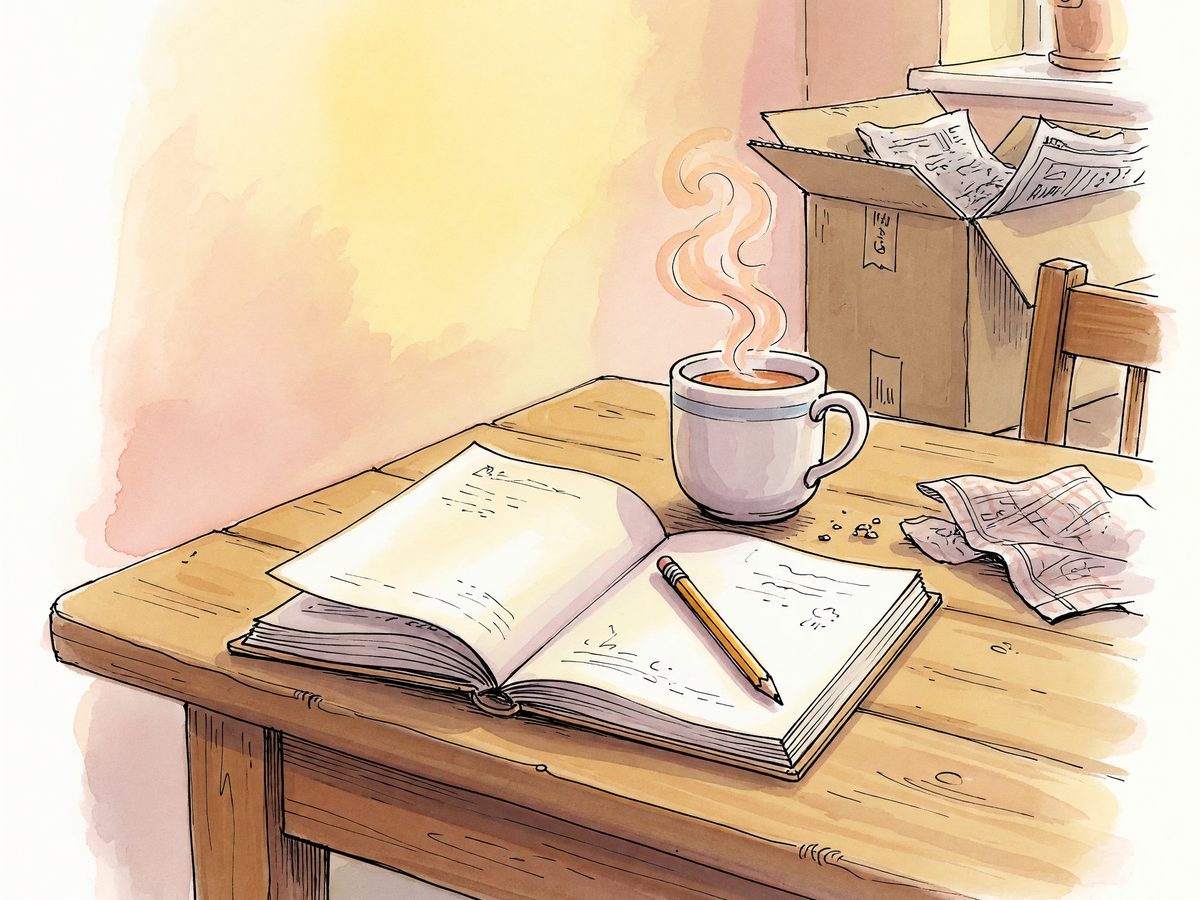
Keep the list somewhere it won't get packed. A note on your phone works fine. When you're ready to shape it into a book, these lines become the pages almost on their own.
Let the new place have a chapter too
It's tempting to make the whole story about the old home, all warmth and nostalgia. But a child who's moving needs to picture the next part, and a story can go ahead of them like a scout.
You don't have to pretend to know everything about the new house. You can write toward it with open hands: the new room that's waiting to be theirs, the tree out front you haven't climbed yet, the friend they haven't met. A little uncertainty on the page is honest, and it gives the child room to fill in the rest.
A brave story doesn't skip the hard part. It just holds your hand through it.
When the ending points forward instead of back, the book stops being only a goodbye. It becomes a bridge. You can read it in the old house before the truck comes, and again on the first strange night in the new one, when the walls are bare and everything echoes. Same story, and suddenly it belongs to the new place too.
Reading it in the new room
That first night in a new home is the tender one. The boxes are everywhere, nothing is where it should be, and a child lies down in a room that doesn't smell right yet. This is when a familiar book earns its keep, because it's one thing that came through the move unchanged.
A keepsake book is easy to pack near the top and easy to find in the chaos. You keep the digital version, and a hardcover is a nice thing to hold on a night like that. If you want to see the shape of one before you make your own, take a look at a sample book, or read through how it works so you know what to expect.
Read it slowly. Let your child point at the old front door and tell you again about the dinosaur in the yard. Then turn to the last page, the one that looks forward, and read it in the exact room it was pointing toward. That's the whole trick: the old place is safe in the book now, so their hands are free to reach for the new one.
The keepsake, years from now
Homes stack up over a childhood. There's the first one, the one nobody quite remembers, and then the ones after. A book about a specific house freezes it in place: this room, this yard, this summer, this exact child at this exact age.
Years from now, that's a rare thing to have. Photos catch how a place looked. A story catches how it felt to live there, in a child's own strange and wonderful logic. The dented cabinet and the squeaky step make it back onto the page, and that's what future-them will want.
So take the tour. Write down the odd answers. Whether you're moving this summer or thinking ahead, the old house doesn't have to stay behind. It can ride along in a book, opened on a knee, in every room that comes after.
Haz tu propio libro
Empieza con un momento y las personas que hay en él. Nosotros escribimos e ilustramos el resto.
Crear un libro