The Story Ideas Hiding in an Ordinary Week
April 26, 2026 · 6 min read
There's a quiet belief that a story needs a big occasion behind it: a vacation, a milestone, a once-in-a-lifetime trip. And those moments are wonderful. But most families who come to Our Little Book are a little surprised to find that the pages they love most came from somewhere much smaller.
An ordinary week, looked at carefully, is already full of stories. The trick is learning to notice them before they slip past. This is a walk through a normal seven days, pointing at the small scenes that tend to make the loveliest pages.
Monday Morning: The Ritual Nobody Talks About
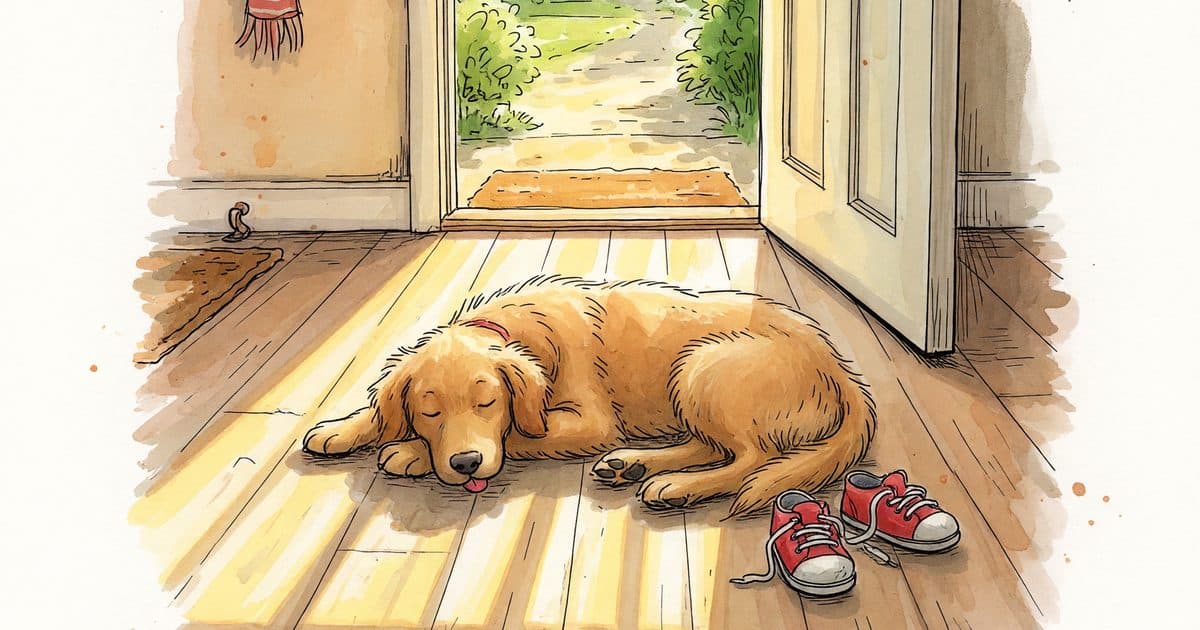
Most families have a Monday morning routine that is so automatic they've stopped seeing it. Someone makes toast a specific way. A dog stations itself at the same spot by the door. A child insists on carrying their own backpack, even when it's clearly too heavy, because that independence matters to them in a way they couldn't quite explain.
These rituals are stories precisely because they're repeated. They're the texture of a particular season of life, and that texture changes slowly and then suddenly. The child who hauls that overstuffed backpack will, before long, just toss a lighter bag over one shoulder without a second thought. The moment you write down the old version is the moment you get to keep it.
Think about one thing that happens on Monday mornings in your house that would make someone outside your family smile if you described it to them. That's your scene. That's a page.
Midweek: The Helper, the Job, and the Proud Face After
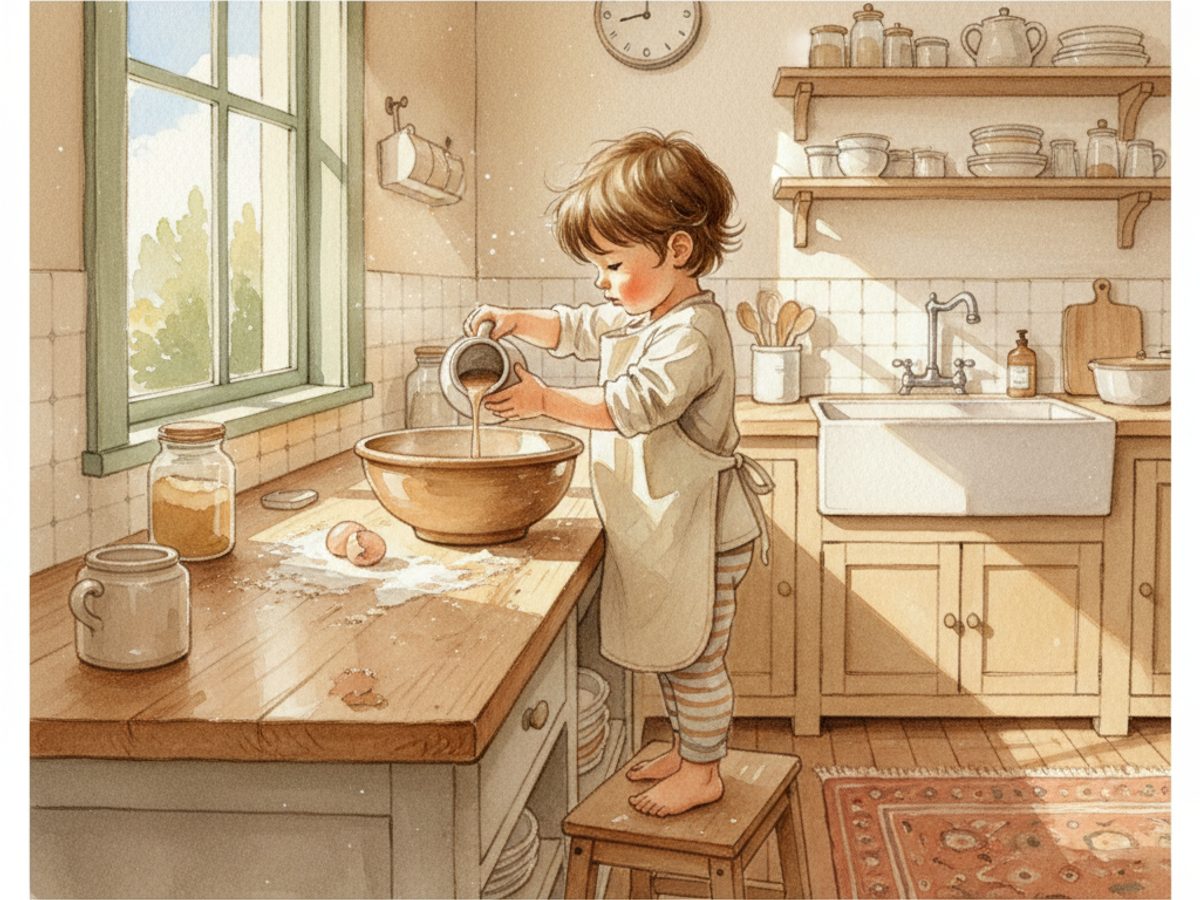
Wednesday tends to be when the real domestic life of a family is visible. Someone is helping with dinner, even if the help is chaotic. A grandparent is showing a grandchild how to fold something, or water something, or fix something small. There's a task being handed down, and a small person receiving it with great seriousness.
What makes these moments so good for a book is that they show character. Not a performance of who someone is, but who they actually are when they're concentrating. The face a child makes when they're trying to crack an egg for the first time is a portrait. The patience a grandparent shows while waiting for a slow, careful pour is a portrait too.
If you're building a book that includes grandparents or other family members outside your immediate home, a midweek helper scene is often the perfect way to bring them in. You can see how characters come together in a finished book, and you'll notice that the most memorable characters are almost always doing something, not just standing still.
Thursday Evening: The Wind-Down You Don't Want to Rush
By Thursday evening, most families have found their groove for the week. Dinner is something familiar. Someone is on the couch. A pet, if there is one, has found its person and settled in. The particular warmth of a Thursday evening, when the week is almost done but the weekend hasn't started demanding things yet, is its own small gift.
This is a good time to notice who gravitates toward whom. Does a child always end up beside a specific parent for the last hour of the day? Does the family dog somehow know whose lap needs company tonight? These small loyalties are quiet and constant, and they are the kind of detail that makes a reader of any age feel seen inside a story.
The best stories about family aren't about what happened. They're about who was there, and how it felt to be with them.
If you've been wondering what a book for your family might actually look like, a Thursday evening scene is an excellent place to start. Warm, low-stakes, full of real detail. Nothing needs to be resolved. It can simply be a moment that was good.
The Weekend: Outside, Together, in May Light
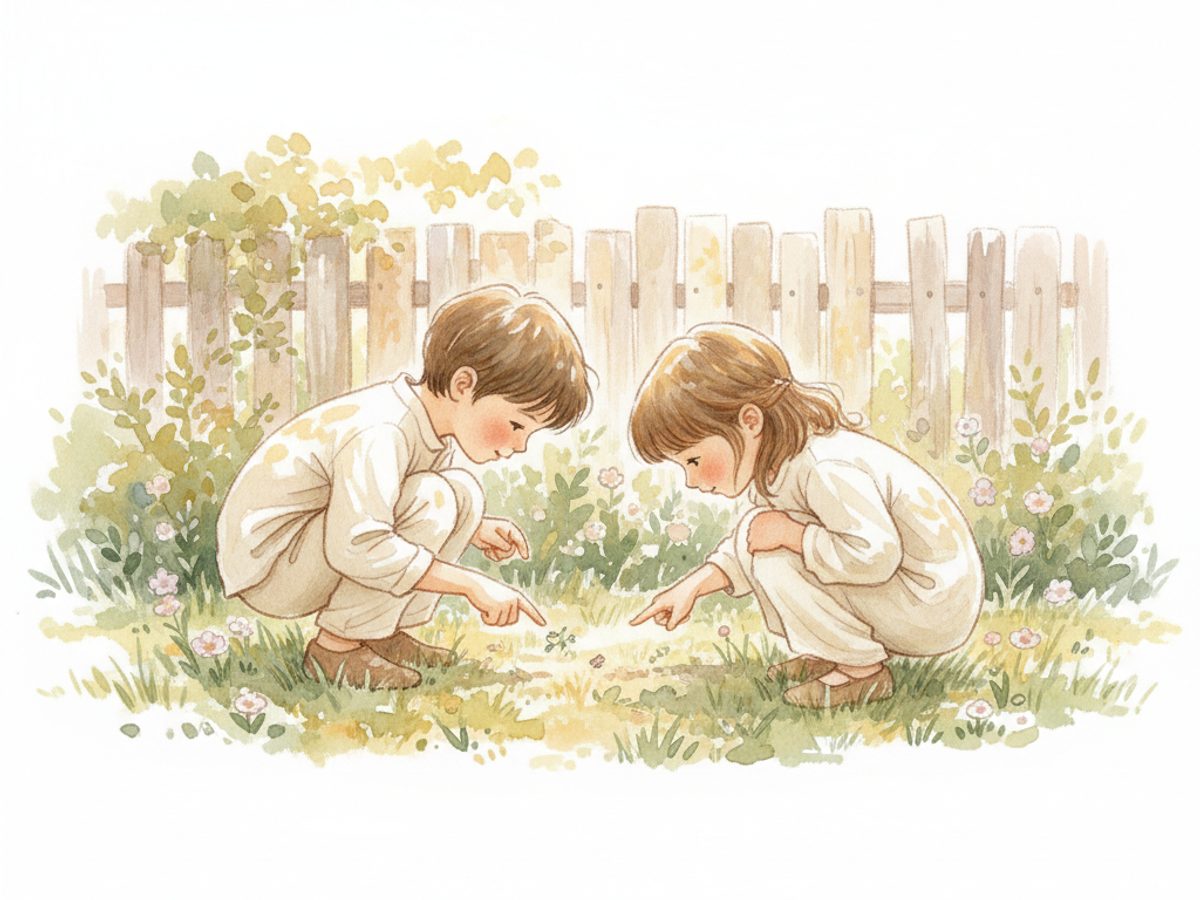
Spring weekends have a particular quality right now. The light is good. People want to be outside. Someone finds a bug, or a bird's nest, or a puddle that is somehow still worth jumping in. There is usually a project underway in the yard, a walk that goes longer than planned, or a stop for something cold on the way home.
What's worth noticing is the small detour. The moment when someone says, let's just go this way instead, and the whole afternoon pivots around a new direction. Or the discovery that stops everyone mid-stride: a caterpillar, a neighbor's dog, a very good stick. Children are extraordinarily good at finding these things, and extraordinarily good at insisting everyone else stop and look too.
A book doesn't need to tell a long story. A single Saturday scene, with the right characters doing one real thing together, can be the whole point. If you'd like to get a feel for the scale of what a finished book holds, you can take a look at how each book is put together before you decide on anything.
The Moments That Seem Too Small to Count
Here is the list that most families overlook, the scenes that feel too small to mention and are often the best ones:
- The specific song that gets put on during car rides, and who always sings along
- The nickname only one person in the family uses
- The way someone reads aloud, with the voices and the pauses
- The pet's favorite spot, and why it's their favorite spot (as your child imagines it)
- The exact order of a bedtime routine that cannot, under any circumstances, be skipped
- The thing a grandparent always says when they arrive at the door
- The game that only exists in your house, with rules nobody could quite explain to an outsider
Each of these is a scene. Each one has characters with real personality, a setting with real texture, and a feeling that belongs specifically to your family and no one else's. That specificity is exactly what makes a book feel like a keepsake rather than a generic story with names swapped in.
The worry most people have is that their everyday life isn't interesting enough to be the subject of a book. But the opposite is almost always true. The closer a story is to a child's actual life, with the real people and real places and real small rituals they know, the more it holds their attention and their heart.
Starting Is Simpler Than You Think
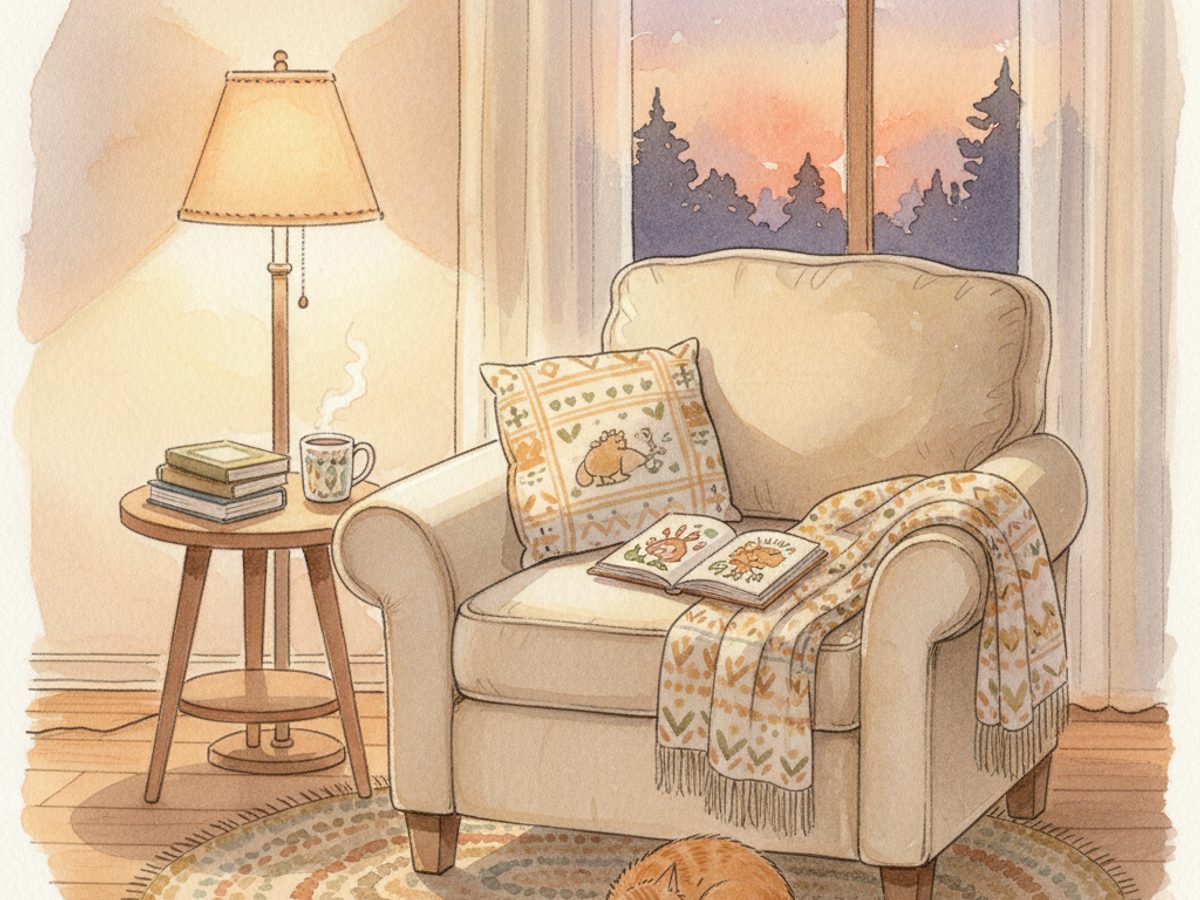
You don't need to have the whole story mapped out before you begin. Most families start with one person, one scene, and one detail they don't want to forget. The characters take shape from there, and so does the rest of the book. The process of building a book is designed to feel like a conversation, not a form to fill out.
If you're thinking about making a book as a gift, an ordinary week is actually a beautiful place to look for the story inside it. A grandparent who does one specific thing every time they visit. A parent with a signature phrase. A pet with a whole personality. The people closest to a child are often the ones whose stories are least often told, because everyone assumes those people are simply always there. A book is a way of saying: I noticed. I want us to remember this.
If you'd like to explore what's possible, take a look at some examples and let the week you're living right now do the rest of the imagining for you.
Make a Book of Your Own
Start with one moment and the people in it. We write and illustrate the rest.
Start a Book