A Book of the School Year They Just Finished
May 3, 2026 · 6 min read
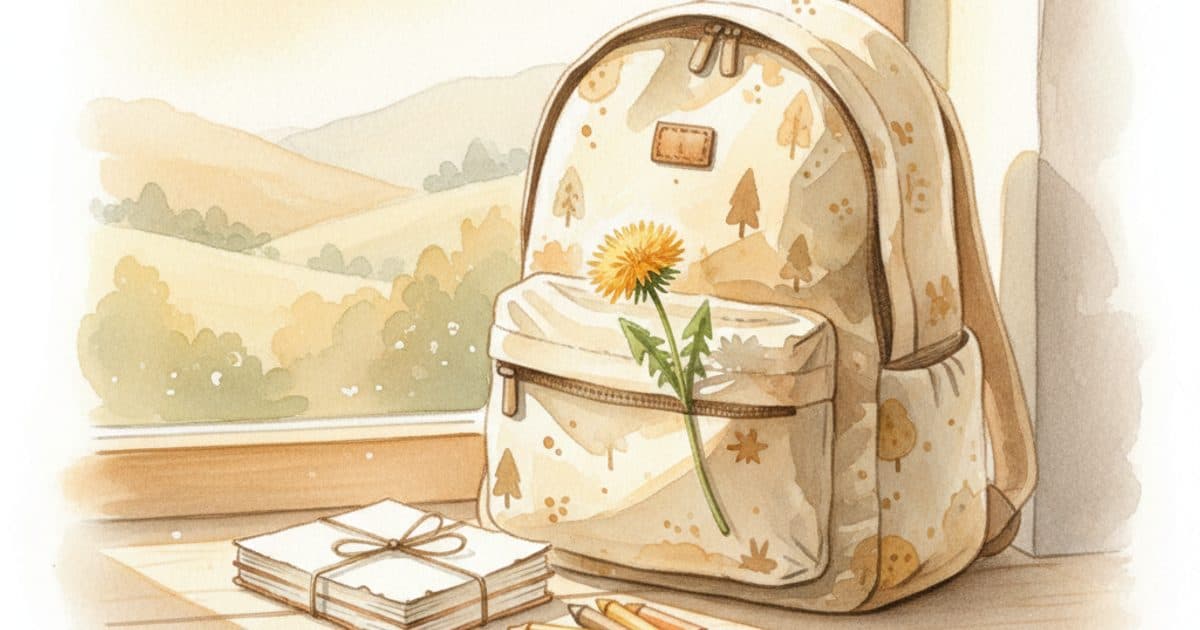
Sometime in the next few weeks, the backpack will get emptied for the last time. The folders will come home, the library books will be returned, and just like that, the year will be over. It always moves faster at the end than it did in September.
Before it all blurs into a general memory of "that year," there's something worth doing. The school year your child just finished is already a small story: it has a beginning, a middle, a handful of characters, and a quiet kind of ending. You can keep it that way.
The Year Had a Shape
Think back to September. There was probably a nervous morning, a new classroom that smelled unfamiliar, maybe a lunchbox packed with a little more care than usual. Your child walked in not quite sure what the year would hold. That uncertainty is part of the story too.
By now, that same classroom is just the classroom. The teacher's name is said the way you say a familiar word, without thinking. The route to the water fountain is automatic. That shift, from new to known, is one of the quiet things children do every single year, and it's almost always taken for granted.
A book built around this year can hold that arc. Not as a lesson or a recap, but as a story: here's where you started, here's what happened, here's who was there. That shape is what makes it feel like something real, something that mattered.
The People Who Made It What It Was
Every school year has its people. There's usually a teacher who made a particular impression, someone whose patience or humor or way of explaining things your child will remember long after the grade itself fades. There might be a friend who was a stranger in September and is now someone your child draws pictures for, shares jokes with, misses on sick days.
There's also the supporting cast: the lunch aide who always let them have a second milk, the classmate who sat nearby and made the hard days easier just by being funny, the librarian who pointed them toward the right book at the right moment. These people rarely get named. A book is one way to name them.
If you're thinking about a way to honor the teacher specifically, it's worth knowing that a personalized book makes a genuinely meaningful end-of-year gift for teachers, one that feels nothing like a candle or a gift card. But even without that in mind, putting a teacher into a story is a way for a child to say: you were important to me this year.
The Things That Were Hard
Every year has something that was hard. Maybe it was a subject that felt impossible in the fall and slowly, stubbornly gave way. Maybe it was making a friend in a new class, or learning to sit still during a part of the day that felt endless. Maybe it was something simpler: remembering to raise a hand, carrying a tray without spilling, reading out loud without feeling embarrassed.
Children often don't notice when hard things become easy. It happens gradually, and then one day they just do the thing without thinking about it. Pointing that out, in a story, is one of the warmest things you can do. It says: look at what you did. Look at where you were and where you are now.
That kind of story doesn't need to be big or dramatic. It just needs to be true. The smaller and more specific you can make it, the more it will feel like theirs.
What to Gather Before the Summer Swallows It
Summer has a way of washing the school year clean. By August, your child might not remember the name of the kid they sat next to every day, or the exact thing their teacher said that made them finally understand fractions. That's not a failure of memory. It's just how time works.
But May is generous. The year is still close. If you sit down with your child now, even for twenty minutes, and ask a few easy questions, you'll be surprised what comes out. Some good ones to start with:
- What was something you couldn't do in September that feels easy now?
- Who was the first friend you made this year, and how did it happen?
- What's one thing your teacher said or did that you still think about?
- What was the best day? What was the hardest?
- What will you miss about this classroom when you're not in it anymore?
- Is there anything from this year you wish you could bring with you?
You don't need all the answers. Even two or three good ones give you more than enough to build something real. Jot them down, or just let the conversation sit in your mind for a day. The details will come back when you need them.
How to Turn It Into a Book
You don't need to be a writer to do this. The way our books work is simple: you tell us about the people in your child's life, we build illustrated characters around them, and together we shape the details you share into short, warm stories. You can see what that looks like in the sample book before you ever commit to anything.
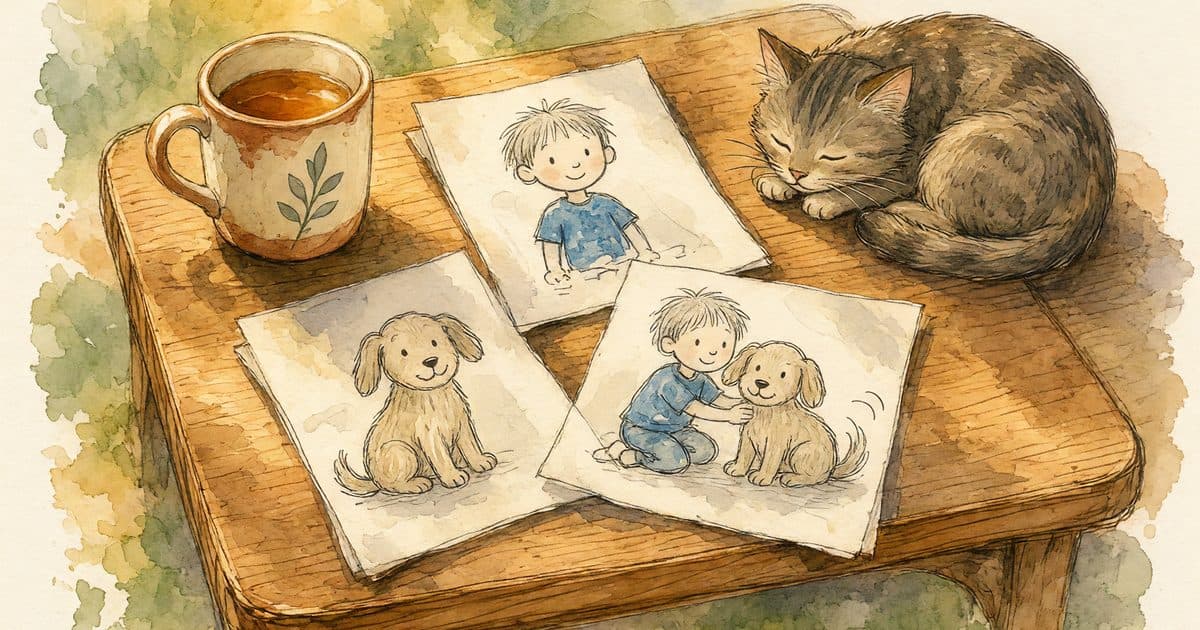
A school year book doesn't have to be long or complicated. It might be three or four short stories: one about the teacher, one about a friendship, one about something that was hard. It might be lighter than that, just a few snapshots of the year turned into illustrated scenes your child can actually hold and read. The goal isn't completeness. It's keeping the texture of the year before it softens into something unrecognizable.
If you've been thinking about how to get started, the end of the school year is one of the best moments to do it. Not because the timing is symbolic, but because the material is right there, still fresh, still specific, still alive in the way things are just before they become memory.
The years that feel the longest while you're inside them are often the ones you're most grateful to have kept.
A Keepsake They'll Actually Want to Read
There's something different about a book that's about you. Children who might ask for the same picture book night after night will sit with a book that has their name in it, their teacher's face, their friend's personality written into a character, and read it with a kind of attention that's quieter and more personal than any other reading.
Years from now, when your child is older and the details of this particular school year have gone soft, a book like this gives them a way back in. Not just to the facts of it, but to the feeling: what it was like to be seven, or eight, or nine, in that classroom, with those people, figuring things out one small day at a time.
The school year is almost over. The summer is right at the edge of it, warm and waiting. Before you let go of this one, it might be worth holding it a little longer, long enough to write it down.
Make a Book of Your Own
Start with one moment and the people in it. We write and illustrate the rest.
Start a Book