The First Day Is Easier With the Familiar Along
August 3, 2026 · 5 min read
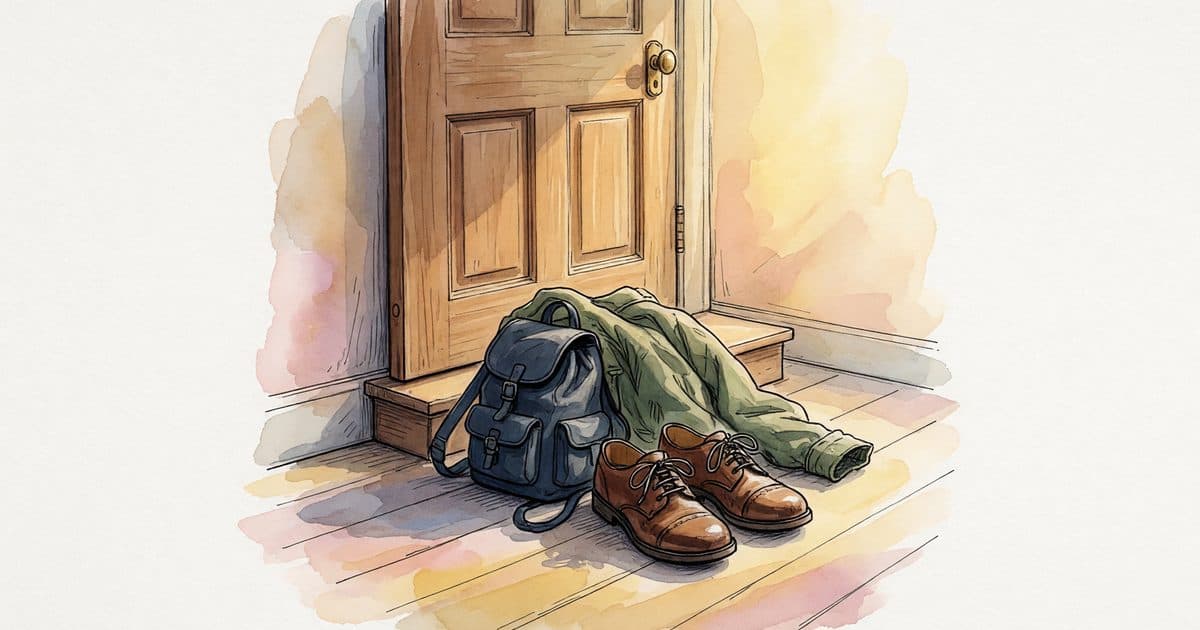
There is a particular quiet that settles over a house in late August. The mornings feel a little cooler. A backpack waits by the door, still stiff and new. Somewhere in the middle of it all is a child who is about to walk into a room they haven't seen yet, full of faces they don't know.
A first day, whether it's the very first or the start of another grade, is a big thing to hold. It helps to remember that the child isn't walking in alone. They carry the familiar with them: the people who wave from the driveway, the routines that bookend the day, the small steady things that don't change no matter which classroom they're in.
What actually stays the same
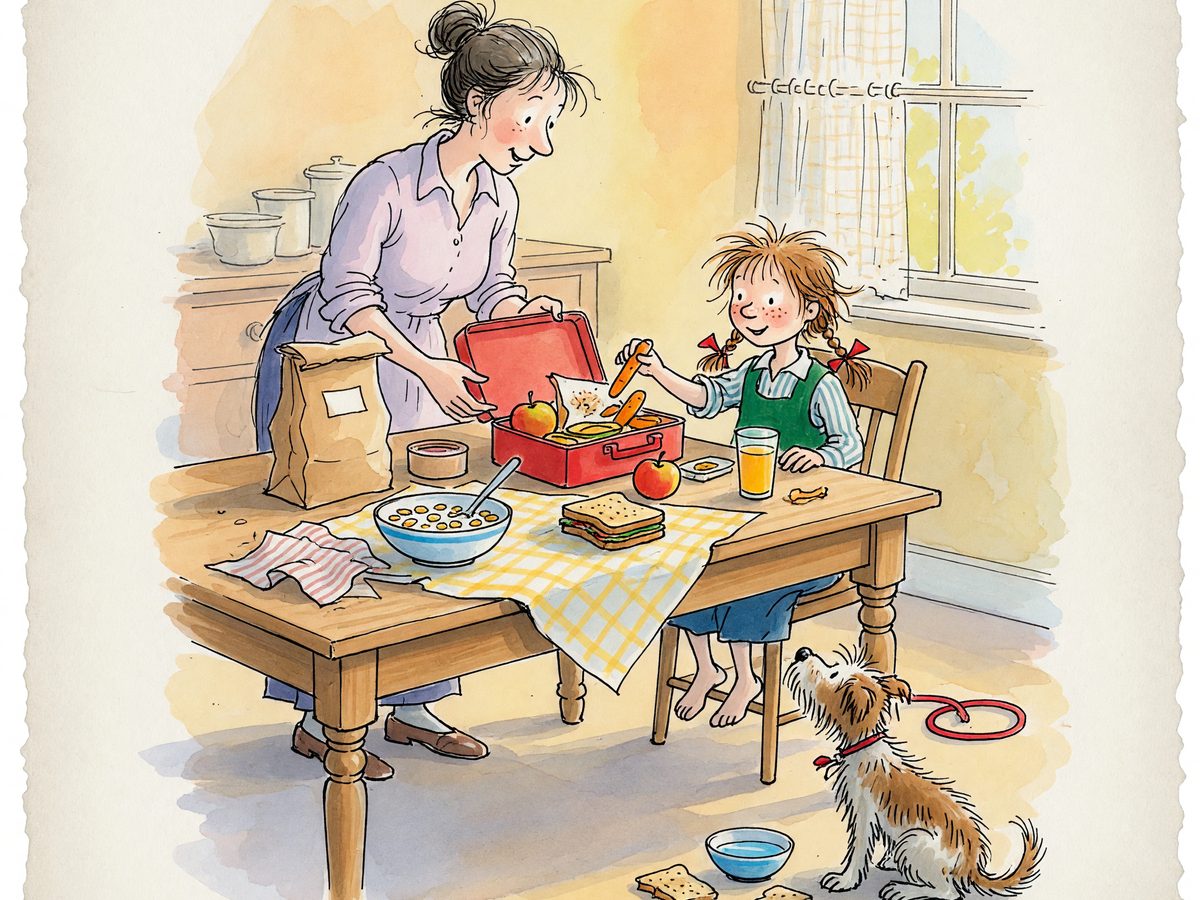
When a day feels new, it's easy to focus on everything that's different. New teacher, new hallway, new rules about where to hang a coat. But most of a child's world is exactly where they left it. The kitchen table is still the kitchen table. The dog still meets them at the door. The person who packs the lunch still packs the lunch.
Naming those steady things out loud can be its own small comfort. You might point to the clock and say what happens after school, or walk the route together the weekend before so the corners feel known. The unknown shrinks a little every time you set something familiar beside it.
A book can do this same quiet work. When the people and routines that surround a child show up on the page, the story becomes a place where the familiar is gathered and easy to find. Not a lesson about being brave, just a reminder of who and what is already there.
Build the story from the steady people
The most reassuring cast for a first-day story isn't invented. It's the people who are already part of the child's ordinary days. The grown-up who does the drop-off. The older sibling who has done this before. The grandparent on the phone at dinner asking how it went.
When you make a book with us, you start by building the characters, the real cast a child loves, and approving how they look before anything else happens. Seeing a familiar face rendered warmly on a page has a way of making a big room feel smaller. If you'd like to see how that first step works, you can peek at how it works or start your own cast whenever you're ready to create.
You don't need a large cast. A child, a grown-up, and a pet is plenty. What matters is that they're the right ones, the ones whose presence the child can feel even when the school day is long and they're not in the room.
The small routines are worth keeping too
Routines are the handrails of a child's day. They're often invisible until you look for them, and once you do, you'll notice how many small anchors already exist. These are the moments a first-day story can quietly hold onto:
- The morning line-up: shoes by the door, a coat zipped, a wave from the window.
- The handoff at drop-off, and whatever small phrase you say every time.
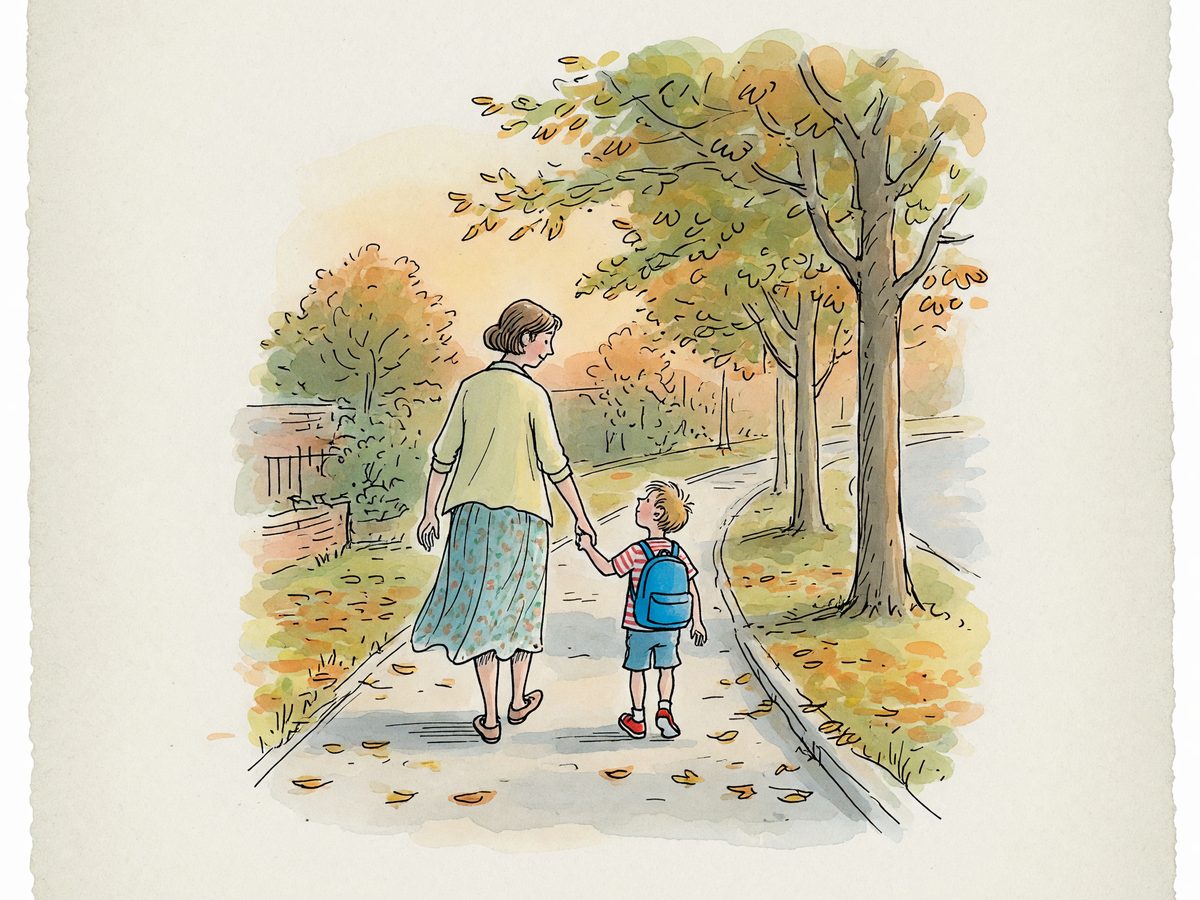
- The pickup, and the first question asked on the walk home.
- A snack that's always waiting, or a favorite spot to drop the backpack.
- The bedtime wind-down, when the day gets talked over or gently set aside.
When these appear in a story, they tell a child something true without ever spelling it out: the day has a beginning and an end, and the same hands are there at both. That shape is steadying. The middle can be new because the edges are known.
If you keep a little list like this before you write, you'll find the book almost outlines itself. Each routine becomes a short scene, and the scenes together become a whole ordinary day, drawn warmly and set down in order.
Two ways to make it
Some families want the whole thing handled. You tell us who the book is for and a moment worth keeping, and we write and illustrate it for you. That's a good fit when the days are full and you'd rather arrive at a finished story than build one from scratch.
Other families want to shape every page themselves, choosing the routines, wording the scenes, editing until the book sounds exactly like their house. Both paths end the same way: a keepsake book of short illustrated stories, yours to keep, with a hardcover you can add if you'd like something to hold. Our starting school gifts are a gentle place to begin if you're not sure which direction suits you.
Whichever way you go, the child approves the character art first. That early yes, that flicker of recognition when they see themselves and the people they love on the page, is often the best part of the whole thing.
When to give it
There's no wrong time, but a book like this tends to land well in the quiet stretch before the first day, when the newness is close enough to feel but not quite here. Reading it a few times in that last week lets the story become familiar, so that on the morning itself the pages feel like an old friend rather than a fresh thing to take in.
It can also be a good companion afterward, for the evenings when a long day needs unpacking slowly. A story that shows the day's shape gives a child something to point at: this is the part I liked, this is the part that felt hard, this is where you were waiting for me.
The bravest thing a child does some mornings is simply trust that the day will bring them home again.
You don't have to make the day smaller than it is. You only have to remind them of everything that comes along with them into it.
Start with one ordinary morning
If you're not sure where to begin, picture one recent morning in full. Who was there. What was said. Which small thing happened the way it always does. That single ordinary morning holds almost everything a reassuring first-day book needs.
When you're ready, you can look at a sample to see how a short set of stories comes together, or simply jot down the people and routines you'd want on the page. The book can wait for you. The steady things it's made of are already right there in your house.
Make a Book of Your Own
Start with one moment and the people in it. We write and illustrate the rest.
Start a Book