The Part Where You Say That's Exactly Her
August 24, 2026 · 7 min read
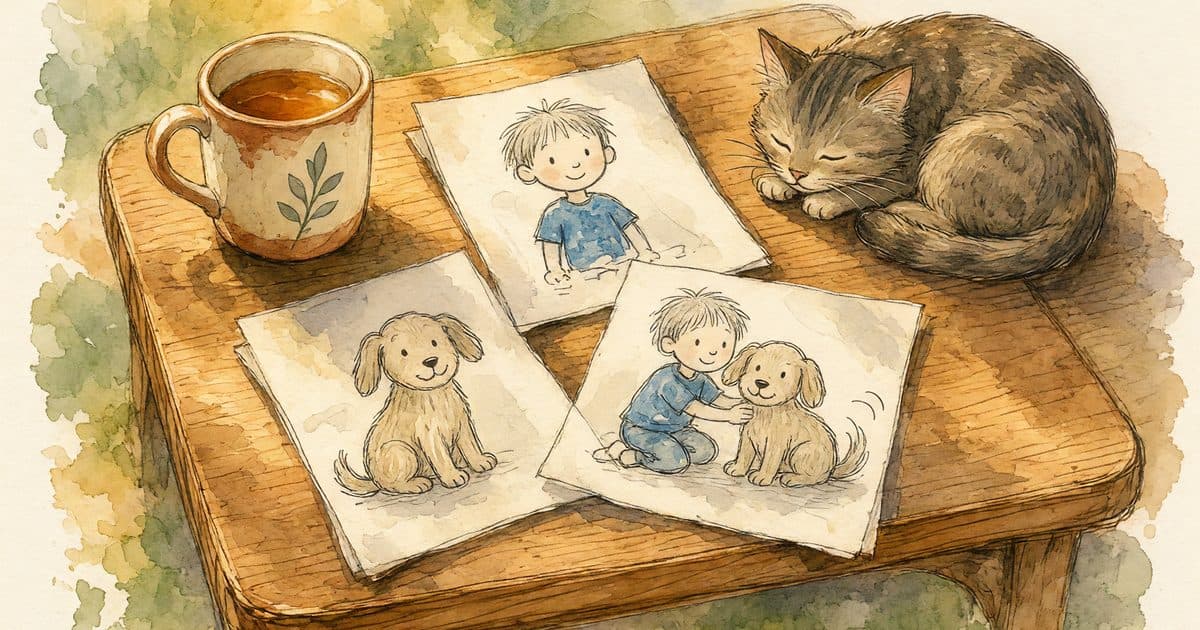
There's a moment, early on, that families tell us about more than any other. It isn't the finished book arriving. It's the first time they see a character sketch and think: that's her. That's exactly the way she stands.
Before a single story gets written, you describe the people and pets you love, and we draw them. You look, you say yes, or you say the hair parts on the other side. Only then does anyone start a page. It's the quietest part of the whole process, and it's the part people seem to enjoy most.
Why the cast comes first
A story about a generic child in a generic yard is a nice story. A story about your child, the one who wears rain boots in August because she likes the sound they make, is something else entirely. The difference isn't the plot. It's whether the person on the page is recognizably someone.
So we build the cast before the stories. It's a little backwards from how books usually work, and it's deliberate. Once we know that the dog has one ear that flops and one that doesn't, and that Grandpa's glasses live on top of his head more often than on his face, the stories have something to hold onto. Details like that turn into small jokes, small gestures, small returns across the pages.
It also means the part that's hardest to fix later gets settled first. Nobody wants to read six finished pages and realize the hair is wrong the whole way through. You approve the art up front, so what follows is built on a face you've already nodded at. You can see the shape of it on the how it works page, but the short version is: cast, then stories, then book.
What actually makes someone recognizable
People often start by describing a person the way a passport describes them. Brown hair. Blue eyes. Age six. All true, and all of it fits a few million children. What makes a person recognizable is almost never on that list.
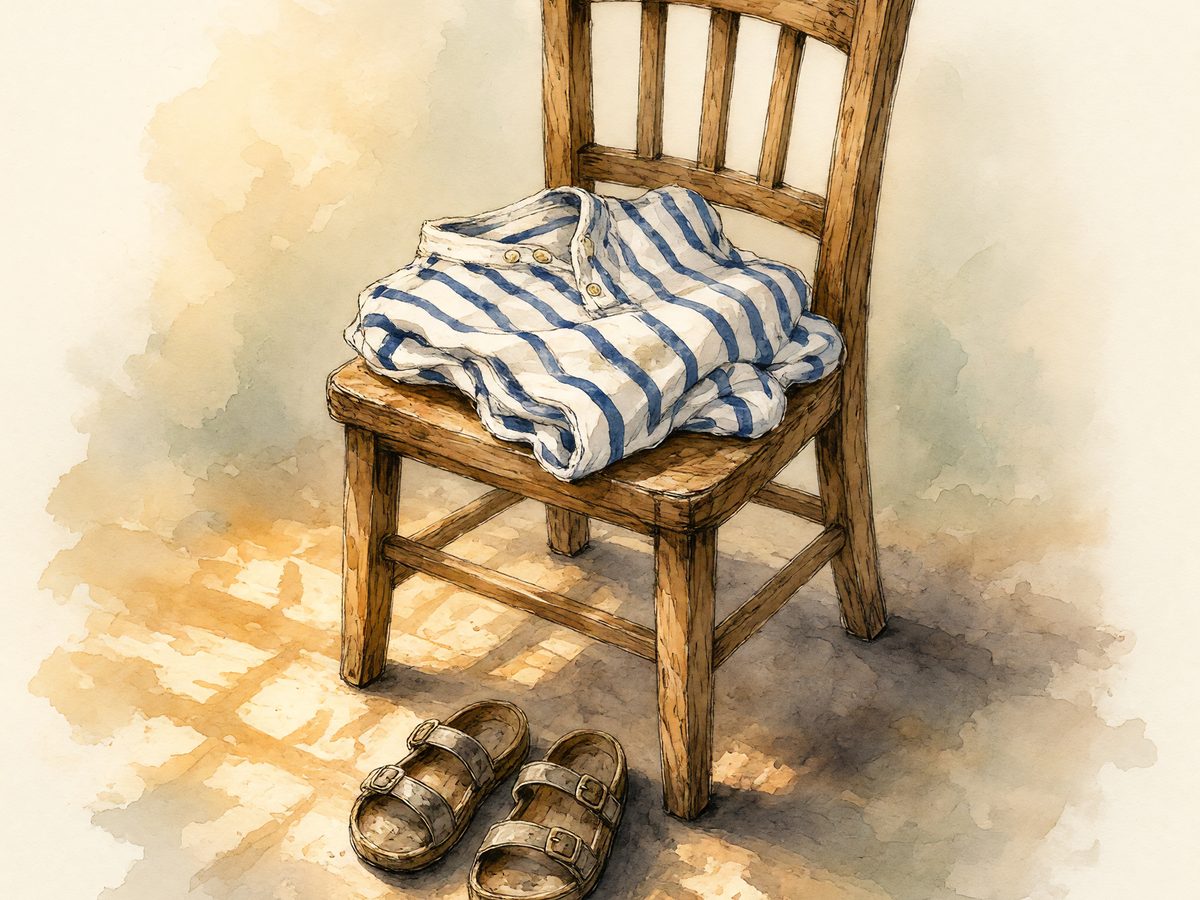
It's the posture. The way he sits on the very edge of a chair like he's about to be called away. The way she holds a cup with both hands even when it isn't hot. It's the one item of clothing that appears in every photo from a whole year: the dinosaur shirt, the striped sweater, the sandals that were supposed to be replaced in June and are somehow still going in August.
Here's the kind of thing worth writing down when you're describing someone:
- The one outfit they'd wear every day if allowed, and the one they refuse.
- How they carry themselves: bouncing, ambling, always slightly ahead of everyone.
- The thing they do with their hands when they're thinking or nervous.
- Hair on an ordinary day, not a photo day. Flyaways count.
- A small object that's usually nearby: a stuffed rabbit, a whistle, a garden trowel, a travel mug.
- For a pet: the marking you'd know from across a park, and the way they sit when they want something.
You don't need all of it. Two or three specific things will carry a character further than a paragraph of general description. If you're not sure which two, pick the ones that would make a family member laugh in recognition.
Describing pets, who don't hold still
Pets are their own delight to build, partly because people describe them so well without trying. Ask someone about their dog and you get specifics immediately: he leans on your leg the whole time you're standing at the counter, she sleeps in the one square of sun that moves across the rug, the cat sits on the stairs at exactly the height where he can look you in the eye.
Coat color helps, of course, and so does the shape of the ears and the length of the tail. But the thing that makes a drawn pet feel like your pet is usually a habit. The head tilt. The specific place they wait. The way an old dog gets up in two stages.
Pets who've passed can be part of the cast too. Families do this often, and it's tender work. If you have a photo, wonderful. If you mostly have memory, that's workable as well: describe what you remember most vividly, even if it's not the most photogenic thing about them, and we'll draw toward that.
The sketch comes back, and you get to be picky
This is the part we most want people to take seriously: when the character art comes back for your approval, be as fussy as you like. Nobody's feelings are involved. Getting it right is the entire point of the step.
Usually the notes are small and very specific. The freckles are right but there are too many. The smile is a little wide, she's more of a half-smiler. He's tall for his age and this looks average. The dog's tail curls the other way. These are exactly the notes that make the difference, and they're easy to act on before any story pages exist.
Sometimes families ask someone else to look. A sibling, a spouse, the grandparent who has known this face since day one. A second pair of eyes catches things the person closest to the child stops seeing. If the book is a surprise for the person in it, a co-conspirator is useful anyway.
You know a face is right when you stop studying it and just recognize it.
Two ways to do this part
Some families want to hand it over. They tell us who the book is for, describe the cast in a few honest sentences, share a moment worth keeping, and let us write and illustrate the whole thing. Even then, the character art comes to you first. That approval never gets skipped, no matter how much of the rest you'd rather not do yourself.
Other families want their hands on all of it. They build each character themselves, shape every story, and review and edit every page until it reads the way they'd say it out loud. If that's you, start building whenever you have a quiet half hour. It's a good thing to do in pieces, a character at a time, rather than in one long sitting.
Either way you end up in the same place: a keepsake book of short illustrated stories, yours to keep, with a hardcover available if you want something with weight to it. If you'd like to see what a finished one looks like before you describe anybody, there's a sample to page through.
A good hour for it, in August
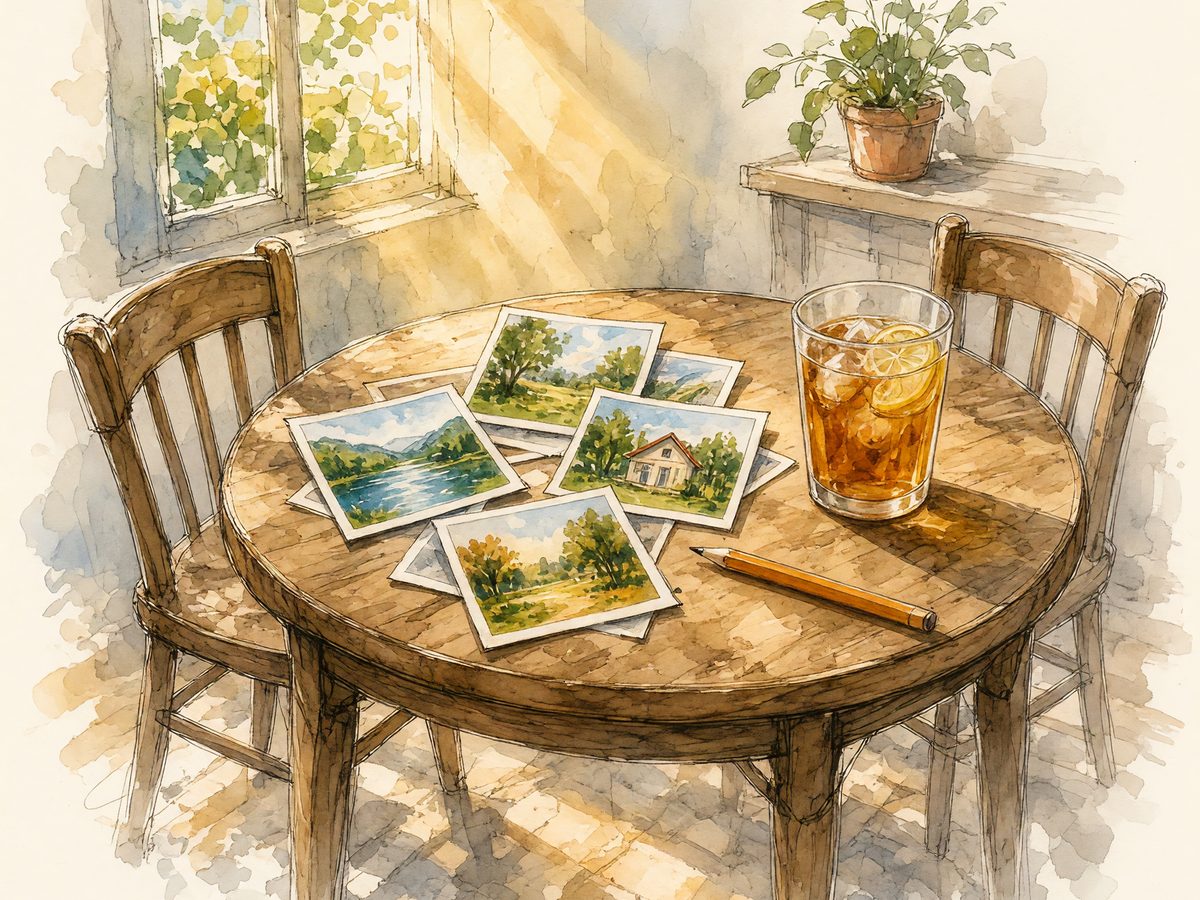
This time of year has a particular kind of pause in it. The last stretch before school, when the days are long and slightly shapeless and nobody quite knows what to do with the late afternoon. It's a decent hour to sit down with a few photos and write some notes about the people in them.
Do it out loud with someone if you can. One person talks, one person writes. You'll find you argue pleasantly about whether the dog's spot is on his left side or his right, and whether Grandma says the phrase that way or the other way. That argument is the useful part. It's how the specifics surface.
Keep the notes even if you don't make anything yet. A page of true details about the people you love is worth having on its own. And if you do decide to turn them into something, whether that's for a birthday or a gift with a little more thought in it than the usual, the hard part is already done.
Start with one face. Describe it the way you'd describe it to someone who's about to meet them at the airport and needs to pick them out of a crowd. That's the whole trick, and it's the beginning of the book.
Make a Book of Your Own
Start with one moment and the people in it. We write and illustrate the rest.
Start a Book