What Grandma's Garden Knows About Your Child
June 8, 2026 · 6 min read
There's a particular kind of afternoon that happens in summer and almost nowhere else. A child trailing a grandparent through the garden. A screen door banging shut. The smell of something slow-cooking on the stove. These hours feel ordinary when they're happening, and irreplaceable the moment they end.
If your child is spending time with a grandparent this season, you're sitting inside one of the richest possible stories. The trick is noticing it before the visit is over.
A Visit Is Already a Story
Most family stories aren't dramatic. They're built from small, repeated things: the route Grandpa always walks, the drawer in Grandma's kitchen that sticks, the particular chair that's unofficially his. These details feel forgettable in the moment, but they're exactly what a child will reach for when they try to describe that person twenty years from now.
A summer visit has a natural shape to it. There's arrival, there's settling in, there are rhythms that belong only to that house. That shape is the spine of a book. You don't need to construct a plot. You just need to pay attention to what's already there and decide it's worth keeping.
The details that feel too small to mention are often the ones worth writing down first. The way a grandparent says a certain word. The mug they always use. The joke they tell every single time. Those are the things a child knows in their bones, and a book can hold them.
The Garden as a Character
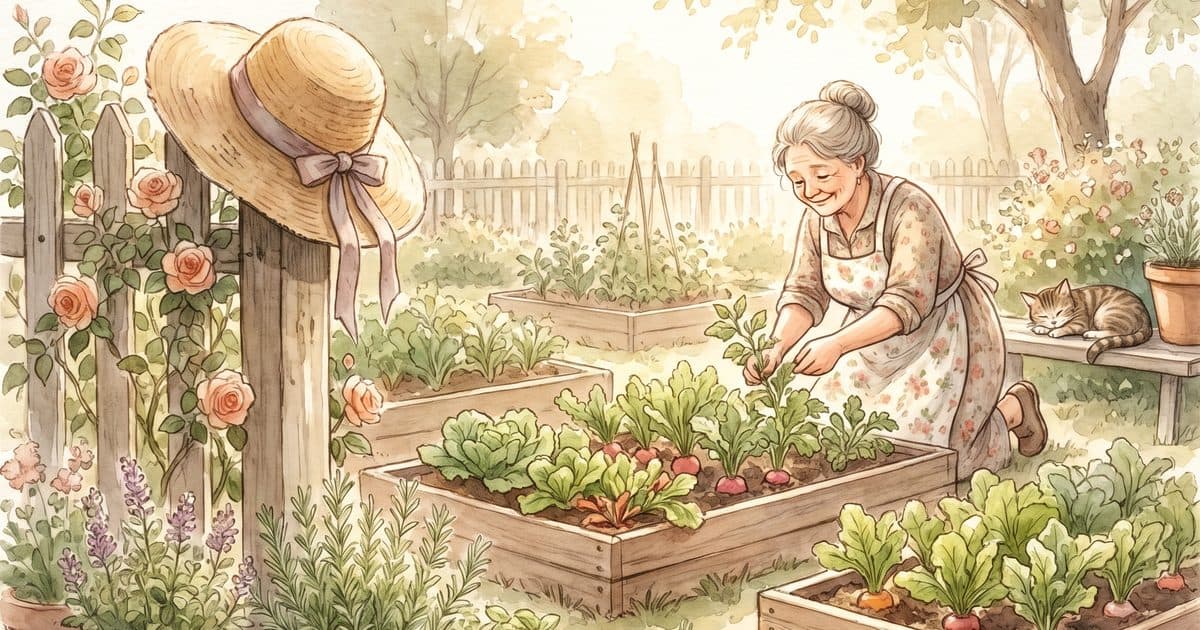
Many grandparents have a garden, and many of those gardens are quietly extraordinary. Not because they're beautiful (though they often are), but because they carry decades of decision-making. That tomato variety planted every year. The rosebush that came from a cutting off a neighbor's fence. The corner where nothing grows because the light never reaches it.
A garden is one of the best places to collect material for a book, because it invites questions naturally. Why do you grow that one? Where did this plant come from? What do you do with all the zucchini? A child asking those questions is already doing the work of a storyteller, gathering the specific details that make a person real on the page.
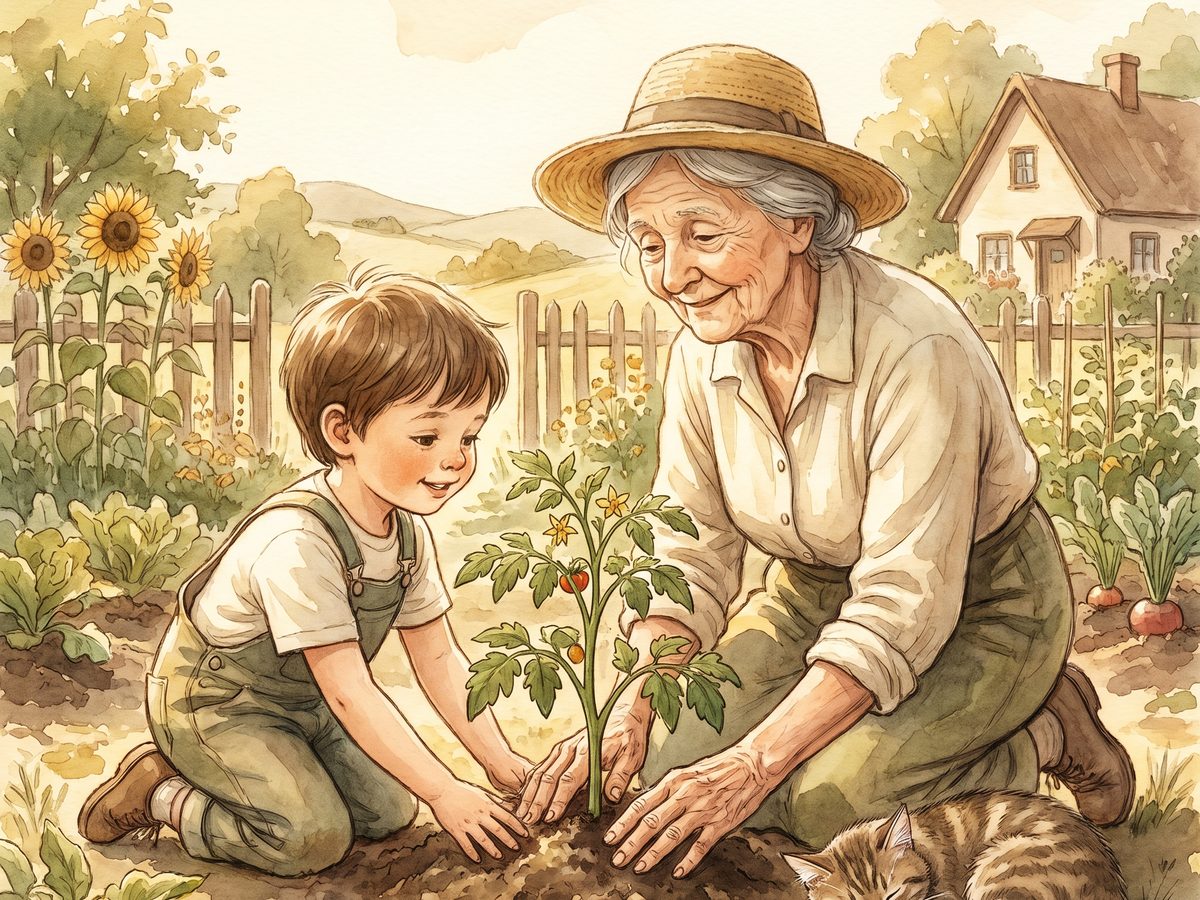
Even if your child's grandparent doesn't garden, the same principle holds. Swap in the workbench, the sewing basket, the fishing tackle box. Any place where a grandparent keeps their particular tools and habits is a place full of story.
Recipes Are Another Kind of Story
Food that a grandparent makes from memory, without a recipe card in sight, is one of the most quietly astonishing things a child can witness. The pinch of this, the handful of that, the judgment built over years of knowing exactly when the dough feels right. It's a kind of knowledge that doesn't live in any book but could.
A book that puts a child in that kitchen, watching those hands, asking those questions, captures something that a photograph can't quite reach. It names the dish. It describes the smell. It shows the child standing on a step stool to see over the counter. Those are the sensory details that make a memory feel real long after the visit ends.
You don't need the recipe itself. You just need the scene: who was there, what was being made, and what it felt like to be small in that warm kitchen. That's enough to anchor the whole thing.
The Stories Told on the Couch
Grandparents talk, if you give them a little room to. Stories come out in the afternoon lull, after lunch, when nobody is rushing anywhere. A grandparent will mention a place they grew up in, a job they had once, a summer when something funny or hard happened. These are the stories a child half-listens to, not yet old enough to know how rare they are.
The stories told on a couch on a slow afternoon are often the ones a child most wants back, years later, when they can't ask for them anymore.
A book can hold one of those stories. Not a complete biography, just one moment: Grandpa as a boy. Grandma on her first day at a job she loved. The time something went sideways and turned into a family story that gets told every reunion. One vivid moment, given a beginning and an end, becomes something a child can return to.
It also gives the child a way in. When a grandparent appears as a character in their own storybook, the child starts asking follow-up questions. They want to know what happened next. A book like that doesn't close a story: it opens a conversation.
What to Gather Before the Visit Ends
You don't need to arrive with a clipboard. Just keep a note on your phone and add to it as the days go by. A few specific things to look for:
- One repeated habit or ritual that belongs only to this grandparent: the morning walk, the evening news, the crossword puzzle.
- One thing they make, grow, build, or fix that the child finds fascinating or baffling.
- One story they tell more than once, because it matters to them.
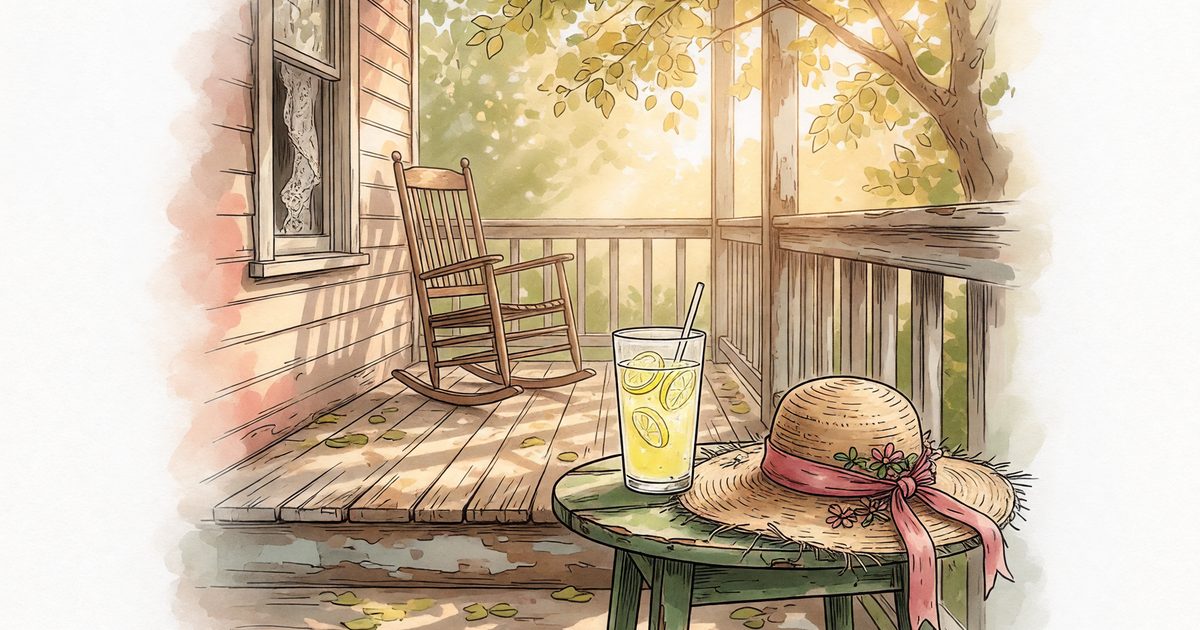
- One place in their home that feels like the heart of it: the kitchen table, the back porch, the armchair by the window.
- One thing the child calls them or says to them that nobody else does.
Five things is plenty. A book doesn't need to contain everything. It needs to contain the right things, chosen with care. You can see how a finished book comes together to get a feel for how much story a few good details can hold.
Building the Book After You Get Home
The best time to build a book like this is while the visit is still fresh: the week after, when the details are still vivid and the child still has opinions about everything. They'll tell you what mattered most, and it's often surprising. Not always the big outing, but the quiet game they played, the food they helped make, the thing a grandparent said that stuck.
When you start creating, you'll build the characters to match the real people: the grandparent's look, the child's look, the pet if there is one. The stories can weave together the actual details you gathered, placed inside warm illustrated scenes. You can explore all the features to see how much a book can hold, from character details to the scenes themselves.
A book like this makes a beautiful gift too, in either direction. A grandparent who receives a book in which they are the main character, seen through their grandchild's eyes, is holding something that no other gift quite resembles. You can find more ideas in the grandparent gift collection if you're looking for the right occasion to wrap it around.
The Visit Will End. The Book Won't.
Every summer visit has a last morning: the bags by the door, the long hug, the car pulling away. What you made together during those days doesn't have to live only in photographs or in the softening edges of memory. It can live in a book, with the garden on one page and Grandma's kitchen on the next, and a child at the center of it all, exactly where they were.
Make a Book of Your Own
Start with one moment and the people in it. We write and illustrate the rest.
Start a Book