Small and True Beats Big and Grand
August 17, 2026 · 6 min read
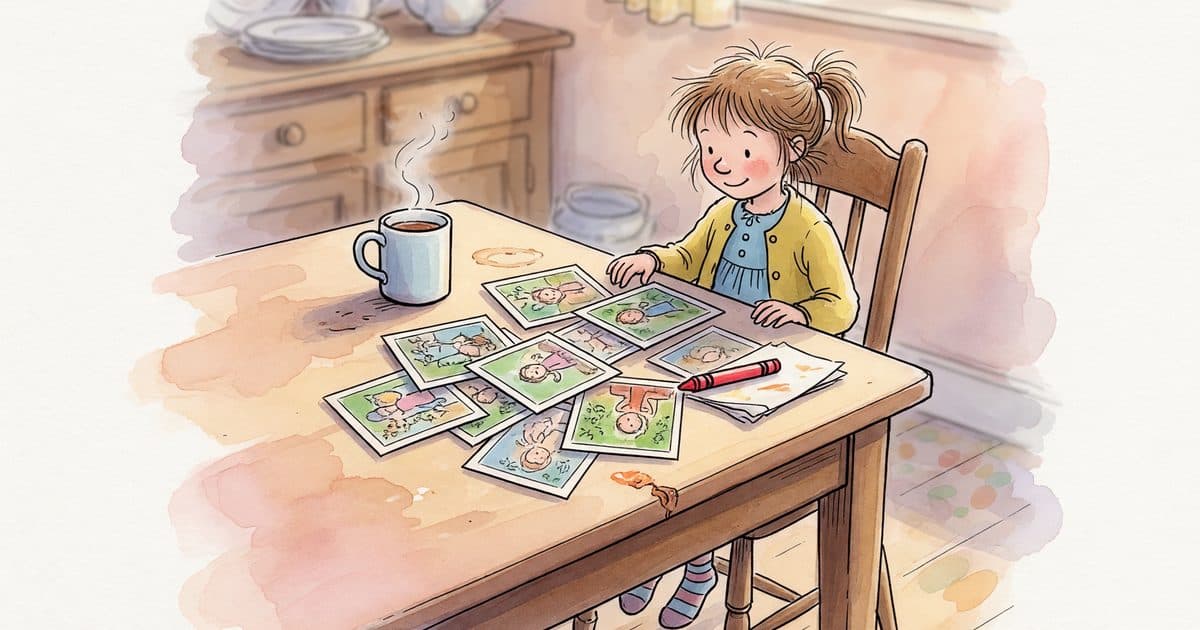
When people sit down to dream up a book about someone they love, they often reach for something enormous. A whole childhood. An entire summer. The full sweep of a friendship. And then the idea gets heavy, and it stalls, because there's simply too much of it to hold.
Here's the quiet truth we keep learning: the best starting point is almost always small. Not a grand theme, but a single true thing you already know by heart. The way someone laughs. The route you always take. The one snack that solves everything. Specific beats grand, every time, and it's easier to begin, too.
Why the small idea wins
A grand idea sounds impressive, but it's slippery. "A book about how much I love my daughter" is true and enormous and impossible to draw. There's no scene in it yet, no smell, no sound, nothing your eye can land on. It's a feeling looking for a shape.
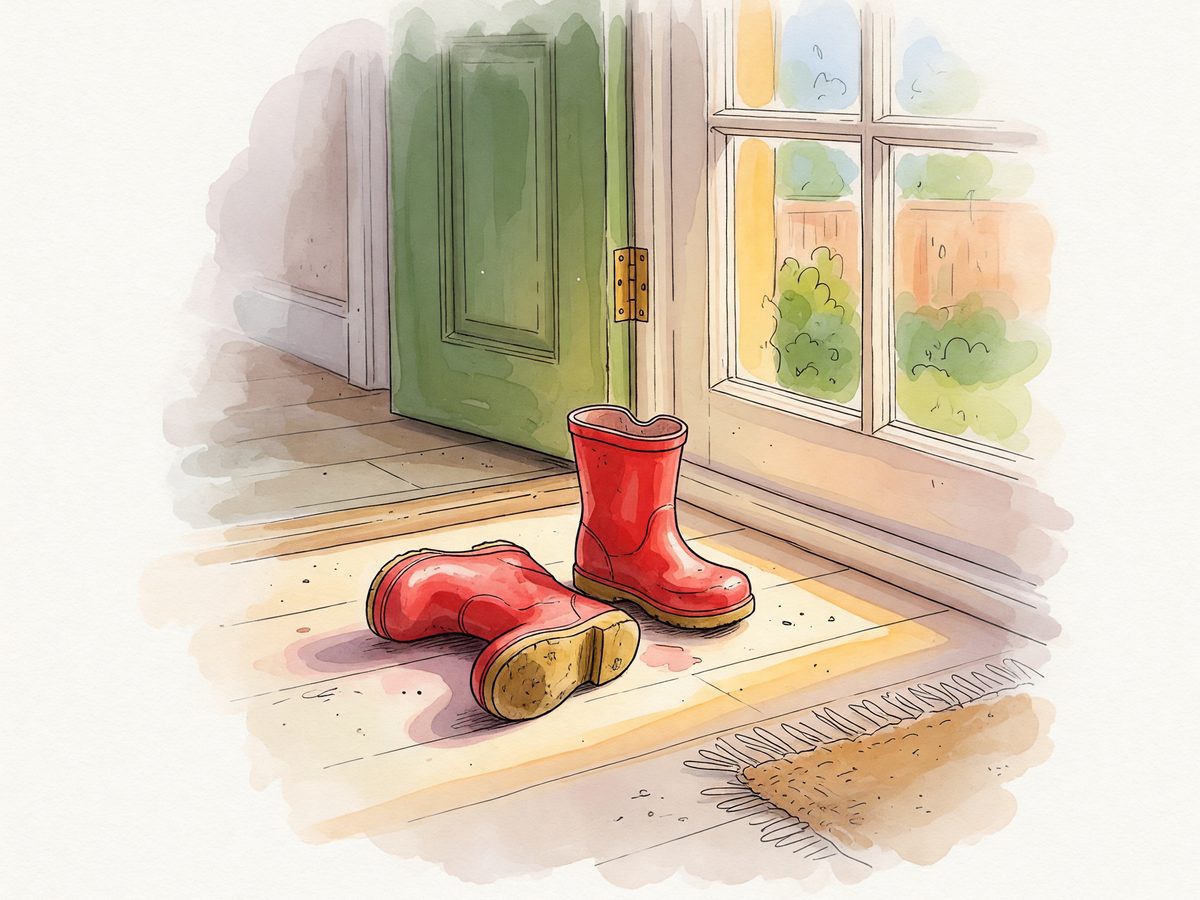
A small idea already has a shape. "The way she insists on wearing the red boots even in August" is a whole page waiting to happen. You can see the boots. You can see her face when you suggest sandals instead. The love is still in there, all of it, but now it has somewhere to live.
This is the thing to trust: the big feeling doesn't get lost when you go small. It gets carried. A specific moment is just a door, and the person who reads the book walks straight through it into everything you meant. You don't have to say the whole ocean. You point at one wave, and they feel the rest.
What a good starting point feels like
You'll know you've found a strong idea when it comes with details you didn't have to invent. If you can already hear it, smell it, or picture where it happened, you're holding something real. That's the raw material a book is made of.
A few signs you're onto a good one:
- It has a sense you can name: a sound, a smell, a texture. The screen door's particular slap. The cold of the lake at first step.
- It repeats. The things families do again and again, like a Saturday pancake, hold more than the once-in-a-lifetime things do.
- It makes you smile before you've explained why. That little private grin is a reliable compass.
- It's small enough to fit in one scene, but it hints at the person's whole way of being.
- You could tell it to a friend in three sentences, and they'd get it.
Notice that none of these are about how important the moment is. A first steps video is precious, but so is the completely ordinary way your dad hums while he does the dishes. Ordinary is not the opposite of meaningful. Often it's where the meaning has been hiding all along, in plain sight, worn smooth by repetition.
Three small moments, turned into pages
It helps to watch a plain little moment become a page, so here are a few. None of them started as a grand idea. Each one started as something a family almost overlooked.
First: a grandmother who always keeps butterscotch candies in her coat pocket. That's it. That's the seed. On the page, it becomes a small ritual: the coat by the door, the crinkle of the wrapper, the way a grandchild's hand knows exactly which pocket to check. You never have to write "she is generous." The pocket says it.
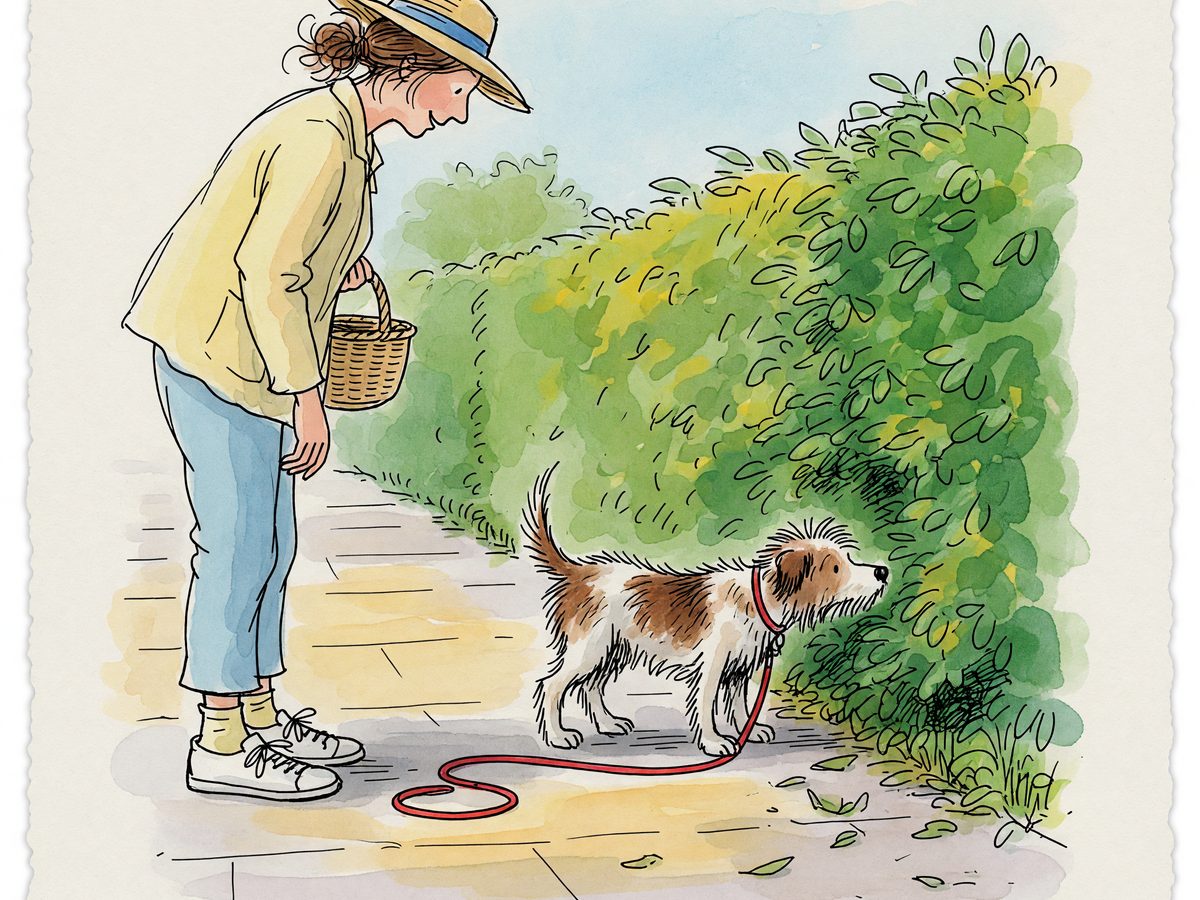
Second: a dog who refuses to walk past a particular hedge without investigating it, every single day. On the page, that becomes a tiny recurring quest, the same corner, the same devoted sniff, the same patient human waiting. It's funny and it's true, and anyone who has loved a stubborn dog will recognize their own at once. If your household has a four-legged member, the pet who already has a story is often the easiest place to begin.
Third: an August evening where the whole family sits on the porch steps eating the last of the melon and watching the light go. Nothing happens. That's the point. On the page it becomes a slow, warm hush, sticky fingers, the sound of crickets starting up, someone not wanting to go inside yet. A book that keeps a nothing-evening like that is a book you'll be glad you have when the evenings change.
How to find yours this week
You don't have to strain for this. The good ideas are usually already happening around you; you just have to catch one while it's still warm. Keep a note on your phone this week and jot down the tiny things: the phrase your kid keeps saying, the exact chair someone always claims, the song that comes on in the car.
August is generous with these. Long light, slow days, small routines that feel like they'll last forever and won't. Write down three of them by Sunday. Don't judge them. The one that keeps tugging at you, the one you reread with a small smile, that's your book. You can shape it from there, either by telling us the moment and letting us write and draw it, or by building every page yourself if you'd rather; both start the same simple way, which you can see over on how it works.
You're not inventing a story. You're noticing one that's already yours.
And if you want to see how a small seed reads once it's a finished page, spend a few minutes with a sample. Look for the tiny specific details in it. That's the whole method, hiding in plain sight.
When to let a small idea grow
Sometimes you start with one butterscotch pocket and realize there are five more moments just like it, each its own small door into the same person. That's a lovely problem to have. A book of short illustrated stories can hold several of them, each a page or two, gathered around the one person they all belong to.
But you don't have to know all of them on day one. Start with the single moment you're surest of. Get that one right, and the others tend to arrive on their own, tapping you on the shoulder while you're doing the dishes. The first true detail lowers the drawbridge for the rest.
So resist the urge to make it big before you've made it real. Pick the smallest true thing you love about someone, and trust it to carry the weight. It will. When you're ready to shape it into something you can hold, you can start a book from exactly that one small moment.
The grand version can wait. The specific one is right there in front of you, in a coat pocket or a red boot or the last melon of the evening. Catch it while the light's still good.
Make a Book of Your Own
Start with one moment and the people in it. We write and illustrate the rest.
Start a Book